
Nikro Air Duct Cleaning in Syracuse: A Homeowner’s Guide
Here’s a scenario we hear about a lot in Syracuse: a company pulls up, sets a HEPA vacuum at the trunk line, switches it on, and then opens every register in the house at once. The machine runs for an hour. The homeowner feels like something happened. What actually happened is that the negative pressure seal broke on the first register, and most of the dislodged debris went into the living space instead of the collection bag. The equipment was real. The process wasn’t.
That’s the gap this guide closes. We want you to understand what a Nikro system actually does inside a duct, so when you talk to a company about duct work in Syracuse, you can ask the right questions and read the answer for what it’s worth.
What does “negative pressure” actually mean during duct cleaning?
Negative pressure means the air pressure inside the duct is lower than the air pressure in the room. When that condition holds, air flows into the duct system rather than out of it – which is the whole point of a collection vacuum. Every register, every return, every seam is a potential leak point that can flip the flow direction if the vacuum is undersized or misapplied.
Here’s how the mechanics work in practice:
- The collection unit is connected at the main trunk. A Nikro HEPA unit is typically tied into the system at a trunk or plenum connection point, not dangled at a single return.
- Every register gets sealed except the one being worked. Open registers are open leaks. If four registers are open and one is being cleaned, the vacuum has four paths of least resistance that bypass the working zone.
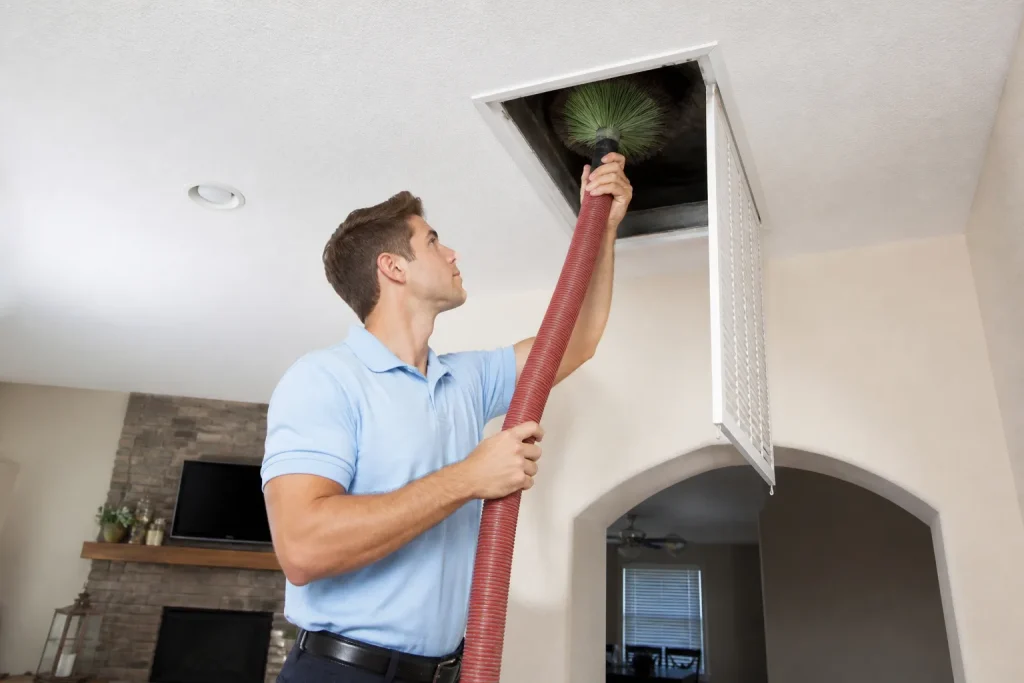
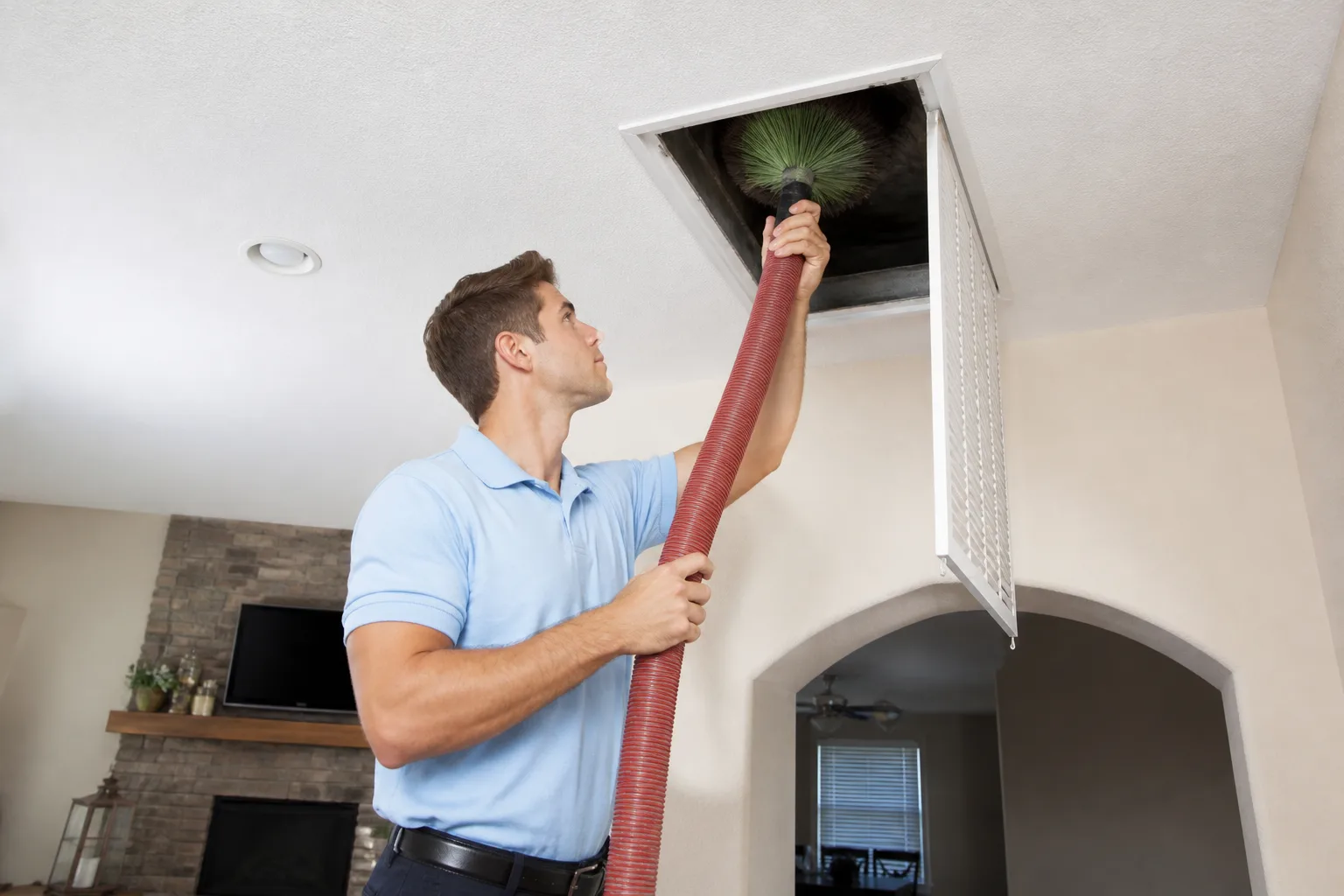
- Controlled agitation happens at the working register. A rotary brush tool – this is where Rotobrush equipment comes in – loosens debris from the duct walls while the vacuum holds pressure.
- The vacuum collects at the source. Because the system is sealed, dislodged material travels toward the collection unit, not into the room.
If a technician skips step two, every other step is compromised. That’s not a knock on the equipment. It’s a process issue. Syracuse homes with older galvanized duct and a mix of flex runs toward the additions are especially vulnerable to this, because those systems leak at more seams and joints than a modern sealed system would.
How is Nikro HEPA filtration different from a shop-vac setup?
A shop-vac pulls air and traps large debris. A Nikro HEPA-rated unit traps the fine fraction – the particles small enough to stay airborne for hours after the collection bag is full and the technician is driving away. The difference matters most in houses where the air is already a concern.
Three Syracuse scenarios where the distinction is real, not theoretical:
- Homes with allergy sufferers. The fine particulate fraction is exactly what triggers reactions. If a cleaning job subtracts from the system in the ducts but adds to the air during the process, the homeowner’s net result is a wash, or worse.
- Homes with recent water intrusion or mold remediation work. Residual spores in a duct system need to be captured and contained, not stirred and released. This is why we also carry Abatement Technologies equipment – it’s built for jobs where containment is the priority.
- Homes with pets or heavy seasonal pollen load. The volume of fine debris is higher, which puts more demand on the collection stage over a longer agitation period.
For a deeper walk through how we approach standard residential work across the region, the Duct Cleaning Syracuse page lays out the visit from inspection to final photo documentation.
What does a proper Nikro cleaning sequence look like, step by step?
The order of operations separates a real clean from a machine parked near a truck. Here’s what the sequence should look like, in order, before a technician touches a single register:
- 1
Inspection. Camera or visual check of the main runs, with notation of any compromised sections – crushed flex, disconnected joints, rust-through at the plenum.
- 2
Register sealing. Supplied-air and return registers masked or sealed off, leaving one access point open at a time.
- 3
Vacuum connection and pressure check. Collection unit connected at the trunk. If the technician can’t tell you the system is holding negative pressure, that’s a red flag in a Syracuse basement with original sheet metal runs that don’t seal the way modern duct does.
- 4
Agitation. Rotary brush contact on the duct walls, working from the furthest register back toward the vacuum connection.
- 5
Collection verification. Visual check of the collection bag, and before-and-after photos of the duct interior so you can see what came out.
Anything that skips step two or step five isn’t a cleaning job – it’s a visit. If you want the full process detail, the air duct cleaning page walks through what our technicians actually do at each step.
What questions should you ask a company that claims to use Nikro equipment?
Ask these four questions before you book anyone. The answers tell you whether the equipment is being used correctly or just parked in the driveway for a photo op.
- “What CFM rating is the unit you’re bringing?” The CFM number tells you how much air the vacuum is actually moving. A machine rated for light residential work on a 3,000-square-foot Syracuse home with long trunk runs is not the same job as the same machine in a 900-square-foot ranch.
- “Are you sealing registers during extraction, or leaving them open?” If the answer is “we leave them open to let the air out,” you’re talking to a company that doesn’t understand negative pressure. Air leaving through a register is air that’s carrying debris into the room.
- “What does your collection verification look like?” The right answer involves before-and-after photos of your own ducts, not a manufacturer video.
- “Do you repair ducts, or only clean them?” A company that only cleans will work around a crushed flex run or a disconnected joint. A company that repairs can fix what it finds.
The equipment brand on the machine matters less than the operator’s discipline using it. We’ve seen good machines on bad jobs, and decent machines on disciplined ones. The discipline is what you’re actually paying for.
Why does this matter more in Syracuse than in a mild-climate market?
Central New York runs a long heating season. For several months of the year, the same air cycles through the same ducts with little natural exchange from open windows. That’s a hard fact of living in Syracuse and it shapes how the ducts should be serviced.
Older housing stock around the city – much of it with a mix of original galvanized duct and later flex additions from renovations – leaks at more seams than a sealed modern system. Every one of those leaks is a pressure loss point during cleaning. It also means the sump-and-crawl-space sections of the system see more moisture cycling than they would in a drier climate, which affects how debris bonds to the duct walls and how hard a rotary brush has to work to break it loose.
The I-81 rebuild and the amount of construction dust that moves through certain neighborhoods during active phases is another local wrinkle. If you live near the corridor, you already know the fine grey particulate finds its way into everything. Ducts are no exception. That’s not a reason to panic-clean every month; it’s a reason to actually verify the equipment and process when you do book the work.
Dryer vents run into the same issue – lint buildup in a system that sees more heating-season cycles than a mild-climate home. The dryer vent cleaning page details the fire-risk side of that equation.
When to call a pro
If you’re seeing visible debris blowing from a register, if you’re hearing a rattle in the return that wasn’t there last year, or if a whole-room airflow problem appeared after a renovation, that’s a call-the-pro moment. It’s also a call-the-pro moment if you’ve had anyone in the home recently and you’re not sure what they actually did. We answer 24/7. Fast dispatch from 7am to 7pm, Sunday through Friday. Call (855) 819-5569.
Related services in Syracuse
For duct repair specifically – the jobs where a crushed run or a disconnected joint has to be fixed, not cleaned around – our team handles that as a standalone service. For whole-home air quality integration in a home already running Honeywell or Aprilaire equipment, duct work ties into that broader system, and we can work within it. And where containment is the priority, Abatement Technologies equipment is the right tool for the job.
The Bottom Line
The Nikro name on a machine is a starting fact, not the whole story. What you’re really hiring is a process: sealed registers, verified negative pressure, disciplined agitation with a rotary brush, and collection verification at the end. Get those four things, and the equipment name is a bonus. Get only the name and skip the process, and the machine is doing more for the company’s marketing than your ducts.
Our technicians have up to 14 years of experience running this equipment in Central New York homes. We carry the professional-grade tools – Rotobrush, Nikro, Abatement Technologies – because doing it right needs the right machine on the right job. If you’re in Syracuse and need help, Duct Cleaning Syracuse offers free estimates – call (855) 819-5569. We answer 24/7. Fast dispatch from 7am to 7pm, Sunday through Friday.
Frequently Asked Questions
A Nikro HEPA-rated unit captures fine particulate at the source through a sealed system, while a shop-vac traps only larger debris and lets the fine fraction go back into the room. On a proper job, the unit maintains negative pressure at the trunk so dislodged material travels into the collection bag, not into the house. For homes with allergy concerns or recent water intrusion, that fine-particle capture is the whole point.
Ask two questions on the day: whether registers were sealed during extraction, and whether they brought a collection bag you can see with before-and-after photos of your own duct interior. When registers are sealed and negative pressure is verified, debris travels into the collection unit. When they aren’t, debris goes into the room and nobody can tell you where it went. If the answer is vague, that tells you plenty.
No. The brand is not the requirement. The requirement is a sealed system, real negative pressure, mechanical agitation on the duct walls, and collection verification at the end. Any company that delivers those four things is doing the job correctly, whatever the nameplate says. The reason we use Nikro specifically is that it delivers the particulate capture required for homes with real indoor air quality concerns.
Most Syracuse homes with a standard forced-air system and no pets or renovations land in the three-to-five-year range. Homes with pets, recent construction, or a system that’s never been cleaned lean toward the shorter end. If a whole-home air quality system from Honeywell or Aprilaire is in place, the duct work becomes part of that broader ecosystem and the maintenance rhythm shifts accordingly. Call (855) 819-5569 when you’re unsure – the estimate is free and the price is set per job by the written estimate.
Written by the team at Duct Cleaning Syracuse.
Need Air Duct Cleaning Help?
Call Duct Cleaning Syracuse - licensed & insured, with free written estimates in Syracuse.
(855) 819-5569