
Last updated November 15, 2026
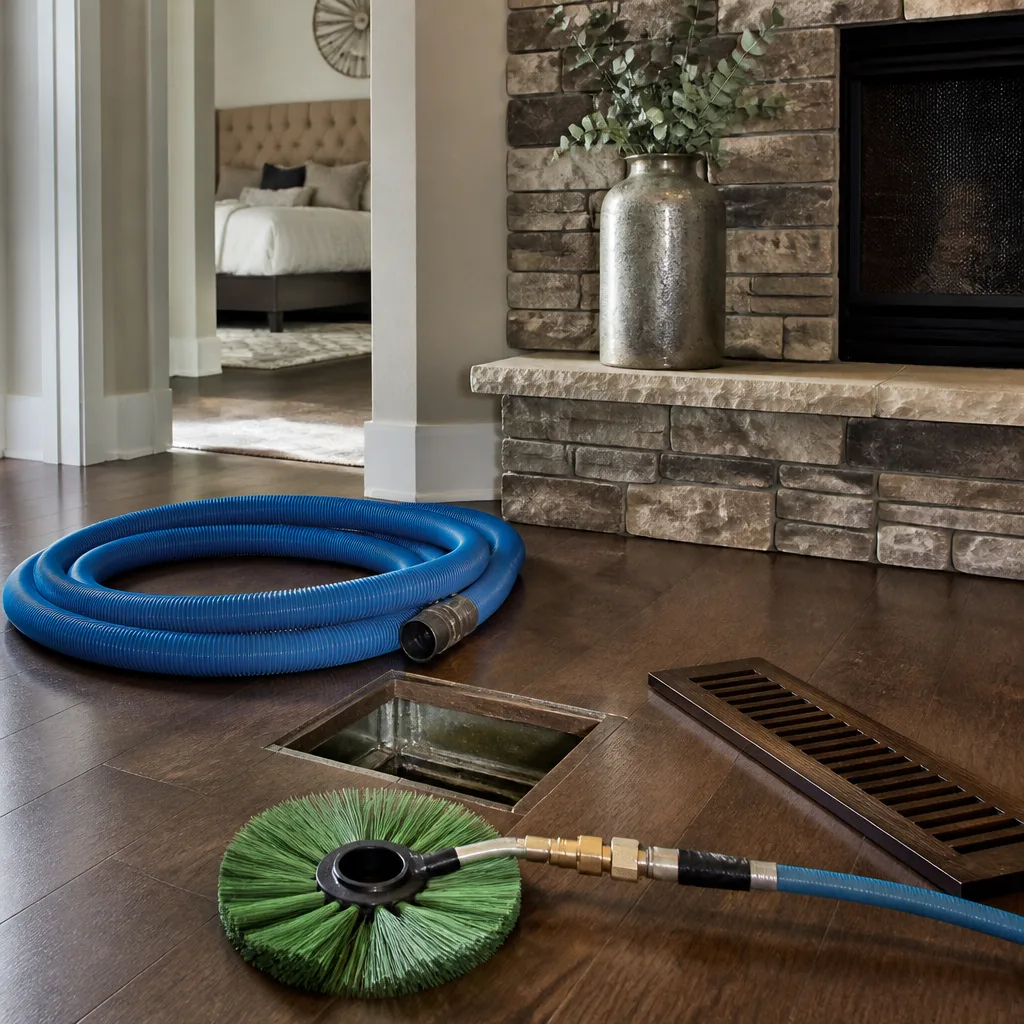 Whole-home duct cleaning
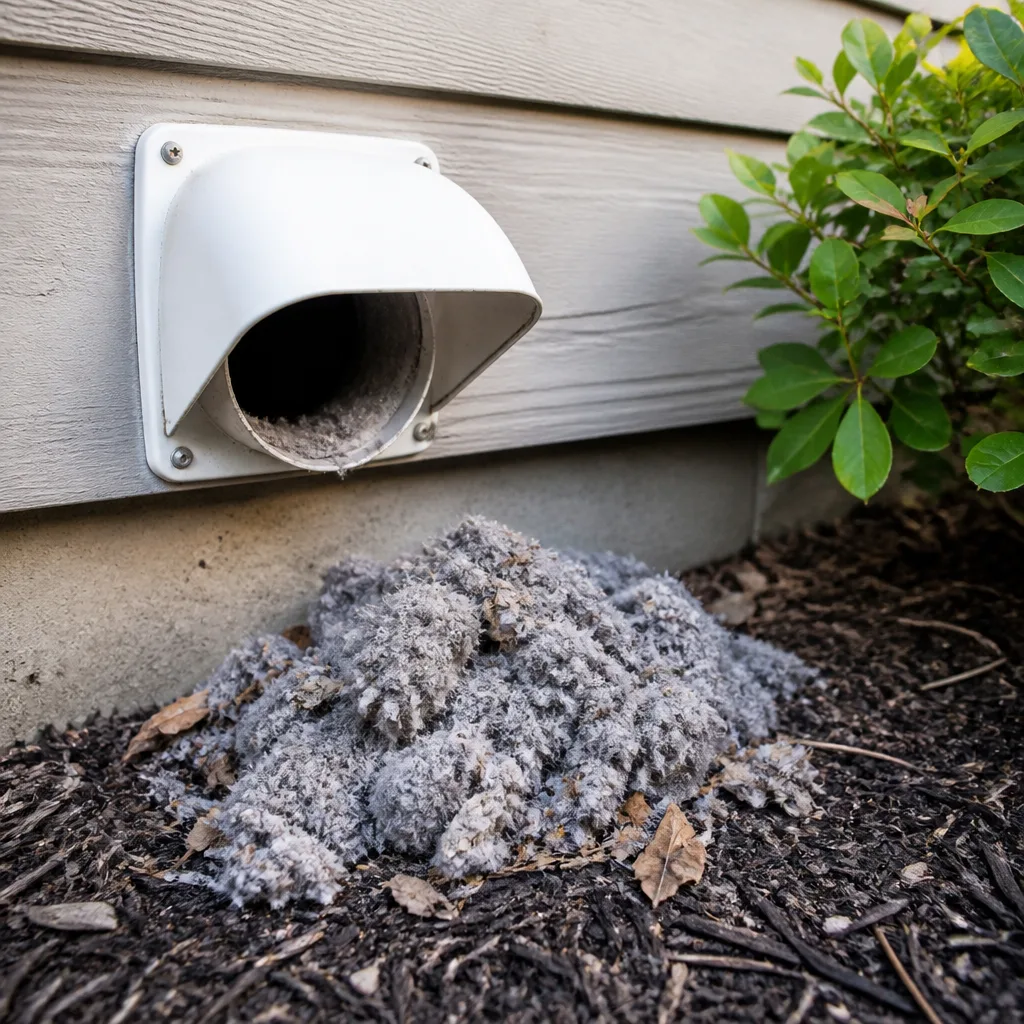 Dryer vent cleaning
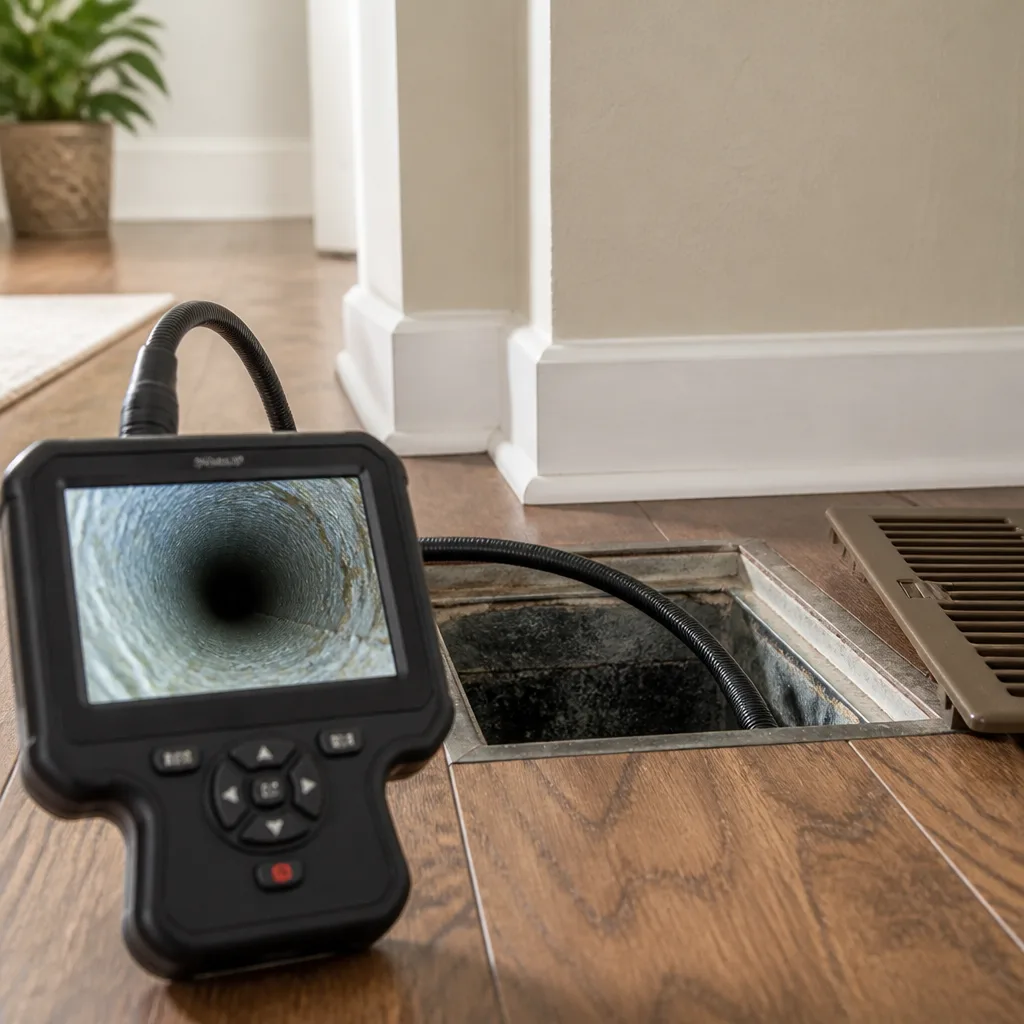 Camera inspection
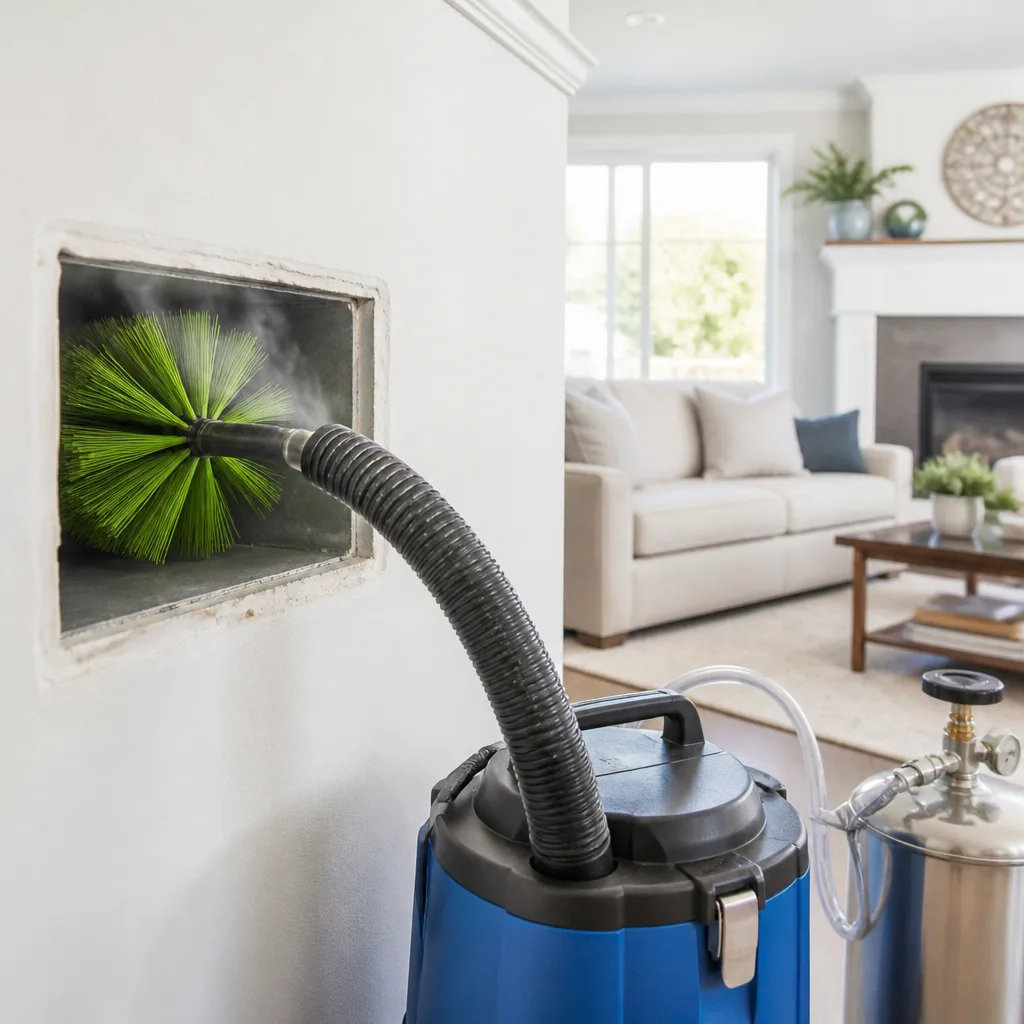 Sanitizing & deodorizing
Whole-system duct and dryer vent check with before-and-after photos - you see exactly what came out of your vents
That "$99 whole-house special" is a bait ad - the real number appears once they are in your hallway, or the "clean" is a shop-vac at the register. We photograph the inside of your ducts before and after instead.
Air Duct Cleaning Maintenance Checklist for Syracuse Homeowners
Replacing a filter every 90 days while ignoring the return plenum is like changing your oil and never checking the air filter. One task creates the illusion of maintenance while the real accumulation point goes unexamined. Most duct problems in Syracuse don’t announce themselves with a bang. They drift: a grille that darkens slowly, a flex run that sags a little more each season, a faint smell at furnace startup that you stop noticing because you smell it every morning. This guide is a system-state checklist, not a cleaning schedule. You’ll learn the five checkpoints you can inspect without tools, how to log a baseline so deviations become obvious, which seasonal events in Syracuse should trigger a review, and a simple go/monitor/call decision tree for every item on the list.
Quick Answer
A workable air duct maintenance checklist for a Syracuse homeowner has five visual checkpoints (return grille buildup, supply register dust rings, flex duct sag, condensation at the air handler, and odor at startup), a simple log of filter dates and runtime hours, and a seasonal review triggered by furnace startup in October and the humid summer stretch. Filter changes are DIY. Anything that shows up as sag, condensation, or persistent odor needs a professional assessment, because those signal a system-state problem rather than a dirty filter.
Styles & brands we work with
- Whole-home duct cleaning
- Dryer vent cleaning
- Camera inspection
- Sanitizing & deodorizing
Table of Contents
- Why a Checklist Beats a Cleaning Schedule
- The Five Checkpoints You Can Inspect Without Tools
- How to Log a Baseline So Deviations Stand Out
- Syracuse Seasonal Triggers for a Checklist Review
- Filter Maintenance vs. System-State Maintenance
- The Go / Monitor / Call Decision Tree
- What a Professional Assessment Actually Measures
- When the Right Answer Is Repair, Not Cleaning
Why a Checklist Beats a Cleaning Schedule
A calendar tells you when someone last cleaned your ducts. A checklist tells you whether the system is drifting. Those are different questions, and only the second one protects your air quality and your heating bill. In our experience across Syracuse homes, the ducts that cause the most trouble aren’t the dirtiest ones. They’re the ones where a small structural change went unnoticed for two or three heating seasons until the symptom became expensive.
Think about what actually happens inside a forced-air system through a Central New York year. From October through April, the furnace pushes warm air through the same trunk and branch runs, hour after hour, and the return side pulls it back with whatever the filter didn’t catch. Then summer arrives, the system switches to cooling, and the same ducts now carry cold air. Cold air plus humidity means condensation potential on any surface that isn’t insulated properly. Two seasons, two very different stress patterns, one duct system that most homeowners never look at.
A schedule-based approach misses all of that. It says “clean every three to five years” and treats every house as identical. A state-based checklist says something more useful: look at these five points, write down what you see, and compare to last time. If nothing moved, you’re fine. If something moved, you know exactly where to look and you can describe it clearly when you call.
That’s the whole idea. Observation first, action second. It’s also why the Duct Cleaning Syracuse approach starts with a look at the system rather than a quote over the phone.
What this checklist is not
It isn’t a replacement for a professional assessment, and it isn’t a promise that a clean-looking grille means clean ducts. Debris accumulates in places you can’t see from the floor: the inside of the return plenum, the joints where flex duct meets a boot, the last few feet before a supply register. What the checklist does is tell you when to stop guessing and get eyes on the inside of the system. That’s a decision only you can make, and it’s easier to make with a log in hand.
The Five Checkpoints You Can Inspect Without Tools
Every one of these takes under five minutes and requires nothing but a flashlight and a phone camera. Do them once to establish a baseline, then again at the seasonal triggers below. Photograph each checkpoint so you have a visual record; memory is a poor judge of “was it this dark last year?”
1. Return grille buildup
The return grille is the large grille, usually in a hallway ceiling or wall, that pulls air back into the system. Look at the fins and the frame behind them. A thin, even film of dust is normal. What you’re watching for is uneven buildup: one side noticeably darker than the other, or dust packed into the gaps between fins. Uneven buildup usually means airflow is favoring one part of the grille, which can point to a partially blocked return or a duct that’s come loose behind the wall. Note the date and take a photo.
2. Supply register dust rings
Supply registers are the smaller grilles that blow conditioned air into rooms. Look at the grille face and the ceiling or wall immediately around it. A soft gray halo around the register is common and generally cosmetic. A dark, defined ring that grows outward from the register is worth noting, because it suggests air is escaping around the boot rather than through the grille, which carries dust with it. Compare registers room to room. If one register is markedly darker than the rest, that’s a signal the run feeding it is underperforming or unsealed.
3. Visible flex duct sag
If you can see flex duct in a basement, crawlspace, attic, or utility closet, look at how it hangs. Flex duct should run in relatively straight, supported spans. Sagging sections, kinks, or runs that visibly dip between supports restrict airflow and tend to collect debris at the low point. You don’t need to fix anything. Just note whether the sag looks new compared to your baseline photos. Any visible tear, disconnect, or crushed section is a call item, not a monitor item.
4. Condensation around the air handler
The air handler is the indoor unit, typically in a basement, closet, or attic. In summer, look for moisture: water stains on the cabinet, damp insulation at the seams, droplets on nearby ductwork, or rust at the bottom of the unit. In winter, look for frost or ice on duct surfaces in unconditioned spaces. Condensation signals an insulation or sealing problem, and it’s the one checkpoint on this list that can quietly damage the structure around it. Never open the air handler cabinet yourself; the wiring and moving parts inside aren’t a homeowner service area.
5. Odor profile at startup
The first time the furnace or air conditioner runs after a long idle stretch, stand in a room near a supply register and pay attention. A brief “hot dust” smell at the start of heating season is normal and fades within a few minutes. What matters is persistence. If the smell stays for days, smells musty or sour, or appears only in certain rooms, note it. Odor that shows up in one room usually points to that run. Odor that shows up system-wide points to the plenum, the air handler, or the coil area. Write down what you smelled, where, and how long it lasted.
If any of these five items look worse than your baseline, the next honest question is whether the right response is air duct cleaning or an inspection of the duct structure itself. A trained eye can tell the difference in the first ten minutes.
How to Log a Baseline So Deviations Stand Out
A checklist without a baseline is just a series of vague impressions. The point of logging is comparison, not recordkeeping for its own sake. You don’t need a spreadsheet; a note on your phone with dated photos is enough. Here’s what to capture, in the order that matters most.
- Filter change dates and filter type. Write down the date, the filter size, and the MERV rating. If you switch brands or ratings, note that too, because a change in filter density affects what reaches the ducts downstream. A three-month schedule isn’t a rule; it’s a starting assumption you’ll adjust once you see how your filter loads.
- Photo of each of the five checkpoints. Same angle, same lighting, same date stamp each time. Six photos per review, taken in the same order, makes comparison trivial.
- Room-by-room register ranking. Walk the house and rank registers from cleanest to dirtiest. It takes two minutes and gives you a clear picture of which runs are doing the most work. If the ranking shifts between reviews, something changed in the system.
- Runtime hours if your thermostat reports them. Many modern thermostats log heating and cooling runtime. If yours does, note the monthly totals. Rising runtime with no change in thermostat setpoints often means the system is working harder to move the same air.
- Odor observations. Free text, dated. “Hot dust smell, 3 minutes, faded” is a useful record. “Smells weird” isn’t.
- Any changes to the house. New furniture blocking a return, a remodel that closed off a room, a new pet, a humidifier added to the system. All of these affect what the ducts see.
Two or three reviews in, patterns emerge. A homeowner who logs for a full year typically discovers one run that loads faster than the rest, or one season where the return grille darkens noticeably. That’s the kind of observation that turns a vague “maybe I should get the ducts cleaned” into a specific question you can ask.
Syracuse Seasonal Triggers for a Checklist Review
Syracuse runs a real four-season climate, which means the duct system sees several distinct stress windows each year. Rather than reviewing on a fixed calendar, tie the review to the events that actually change what the system is doing.
Furnace startup in October
The first sustained heating run is the most useful annual checkpoint. Do the full five-point inspection in the week the furnace comes on for the season. Odor at startup is expected; anything that persists past the first week is worth noting. This is also the natural moment to check filter condition after the summer cooling season.
The humid summer stretch
Syracuse summers bring enough humidity that condensation is a real consideration on ductwork in basements, crawlspaces, and attics. Mid-summer, check the air handler and any visible duct surfaces in unconditioned spaces for moisture. Wet insulation at a seam is worth photographing even if nothing else looks off. This is the checkpoint most homeowners skip because the system is “just running the AC.”
Pollen peaks in spring
Late spring pollen loads the return side harder than at any other time of year. Expect the return grille to darken faster during this window, and don’t read it as a sign something is wrong. What matters is whether it clears up through the summer. If the grille stays dark into August, that’s a signal.
After any major remodel or renovation
Drywall dust and construction debris travel through the system in ways that ordinary dust doesn’t. Any time a room has been opened up, add a full review once the work is finished and the space has been cleaned.
Before switching seasons
Going into heating season and going into cooling season are both natural review points. Each switchover is a chance to look at the system when it’s briefly idle, before a new set of conditions starts.
If you want a broader sense of how the local climate and housing stock shape duct work in the area, the city resource at Syracuse covers the local context in more depth.
Filter Maintenance vs. System-State Maintenance
The cleanest line in home maintenance runs between what you can do with a filter and what requires an assessment. Filter changes are yours. System-state evaluation is a professional task, and the difference is worth understanding because it’s the source of most wasted time and money in this category.
- Filter changes (DIY): Replacing the return-side filter at whatever interval your log shows is appropriate. Checking that the filter fits snugly. Confirming the filter isn’t being bypassed around the edges because the slot is too large for it. All of that is straightforward homeowner work.
- Grille cleaning (DIY): Vacuuming the visible face of a return grille or wiping a supply register with a damp cloth. This is cosmetic, and it won’t change what’s inside the ducts.
- Visual inspection of the five checkpoints (DIY): This is what the guide so far has been about. Look, photograph, log, compare.
- Inside-the-duct assessment (professional): Looking at the actual interior surfaces of the plenum and branch runs. This requires the right tools and the right experience to interpret what the tools show.
- Airflow and static-pressure testing (professional): Measurement that tells you whether the system is moving air efficiently or working against a restriction. Homeowners can’t measure this with a flashlight.
- Structural duct examination (professional): Confirming whether a run is connected, sealed, and intact. Flex duct that looks fine from the outside can be torn or disconnected behind a boot.
The reason the distinction matters: filter changes create the illusion of maintenance, but they don’t tell you anything about the state of the system behind the filter. You can be religious about filter replacement and still have a sagging return run feeding half the debris in the house into your living room. A maintenance log that captures both the filter side and the system side is the only version that actually works.
The Go / Monitor / Call Decision Tree
Every checkpoint on the list needs an answer that’s specific enough to act on. Without that, observation turns into worry or gets ignored entirely. Here’s how to make the call for each one, based on what you saw at review time and compared to your baseline.
- If buildup or dust rings match your baseline photo closely: Go. Nothing to do. Note the date and move on.
- If buildup looks moderately darker than baseline, but the pattern is even and no other checkpoint moved: Monitor. Revisit in three months. If it keeps progressing, escalate.
- If buildup is uneven across a grille, or one register is markedly darker than the rest, or any pattern moved noticeably in under one season: Call. Uneven or accelerated loading usually points to a specific airflow problem.
- If flex duct sag looks new or has progressed since baseline, or you can see a kink, tear, or disconnect: Call. This is a repair question, not a cleaning question.
- If condensation, moisture staining, rust, or frost appears anywhere around the air handler or on duct surfaces in unconditioned space: Call. This can damage structure and needs to be diagnosed quickly.
- If odor at startup is brief and fades within the first week of a season: Go. Note the date.
- If odor persists, is musty or sour, or is concentrated in a room: Call. Persistent odor is a system-state signal.
- If your thermostat runtime is creeping up with no change in setpoints and no change in weather: Call. This is a load signal.
Notice how much of the tree resolves to “go” or “monitor.” That’s intentional. A checklist that sends you to the phone every season isn’t a checklist, it’s a sales funnel. The value is in the small set of signals that actually warrant professional attention, and in knowing how to describe them clearly when you make the call.
What a Professional Assessment Actually Measures
When a checklist observation does warrant a professional look, the right equipment is what separates a useful assessment from a surface-level one. On the street, the difference usually comes down to two things: whether the technician can mechanically agitate the inside surfaces of the duct, and whether the dislodged material actually gets captured or just redistributed into the living space.
Rotobrush rotary brush systems do the mechanical agitation: a rotating brush travels inside the duct and physically dislodges material that a vacuum alone can’t lift from the walls. Nikro HEPA-rated extraction equipment handles the capture side, containing the dislodged particulate at the source. Together they represent the same category of professional equipment HVAC contractors use, not consumer shop-vac setups.
A thorough assessment goes beyond cleaning. It measures airflow and static pressure to see how the system is actually moving air. It looks at joints and boot connections for leaks. It checks whether the duct interior matches what was assumed before the crew arrived. Where a home has elevated indoor air quality concerns, Abatement Technologies equipment is the right tool for containment, which is the difference between a routine cleaning visit and a serious IAQ job.
Some homes have whole-home air quality systems integrated with the ductwork, such as Aprilaire or Honeywell setups. In those cases, duct work is one layer of a broader system, and a professional assessment should account for how cleaning and repair integrate with that layer rather than treating the ducts in isolation.
The other thing a professional assessment tells you is whether the answer is cleaning or repair. That’s the next section.
When the Right Answer Is Repair, Not Cleaning
Cleaning a duct system that has a structural problem is really cleaning around the problem. In our experience across Syracuse homes, at least a few problems on every full system inspection turn out to be repair items rather than cleaning items. The good news is that repair is a service in its own right, not something you have to negotiate with a general contractor after the duct crew leaves.
What a repair call typically involves:
- Reconnecting runs that have come apart at a joint, boot, or transition. Disconnected runs are one of the most common causes of uneven register loading.
- Replacing or re-supporting flex duct that has sagged, kinked, or been crushed by other work in the space.
- Sealing leaks where duct sections join, where the boot meets the register, and where the trunk meets the plenum.
- Addressing return-side configuration issues that a filter change can’t fix.
This is why we treat air duct repair as a standalone service rather than a bolt-on to cleaning. If we find a structural issue during a cleaning visit, we can fix it. Cleaning and walking away from a disconnected run doesn’t serve the homeowner, because the run will accumulate debris again as soon as it’s back in service.
There’s a related service worth mentioning: dryer vent cleaning. It shares two things with duct work, the equipment and the physical space, but the reasoning is different. A dryer vent is a fire risk, and what the cleaning process removes is lint accumulation that builds up over time along the vent path. The checklist logic is similar (observe, log, act), but the risk profile pushes the timeline shorter. If your dryer vent has never been cleaned, or you can’t remember when it was, that’s a call worth making on its own. More at dryer vent cleaning.
Common Mistakes to Avoid
- Treating filter replacement as a maintenance success. A new filter is the start of the checklist, not the end of it. Without a look at the system side, you have no idea what’s happening behind the filter.
- Assuming a clean grille means clean ducts. Grilles catch the coarsest material. The fine dust that affects the air handler and the coil lives inside the plenum and runs where you can’t see it.
- Buying on price alone in a market where bait-and-switch is common. In Syracuse, as in most markets, the coupon price is real, and the invoice at the end of the visit is different. Ask for one flat price per system, agreed before work starts, and before-and-after photos of your own ducts.
- Waiting for odor, then cleaning the ducts when the answer is repair. Persistent odor usually points to a specific run, disconnect, or coil issue that cleaning won’t resolve. Diagnose the source first.
- Skipping the summer condensation checkpoint. Syracuse summers are humid enough that a damp seam in the air handler closet goes unnoticed until it’s caused structural damage. Look in July and August, not just at furnace startup.
- Not logging anything. Without a dated baseline, every observation becomes a guess. Photograph the five checkpoints and compare. It’s the difference between “seems fine” and knowing.
- Letting a contractor re-run the airflow through the house without checking the return. The return side is where most accumulation happens. A cleaning process that focuses on supply registers and ignores the return, the plenum, and the air handler is doing part of the job.
See the difference
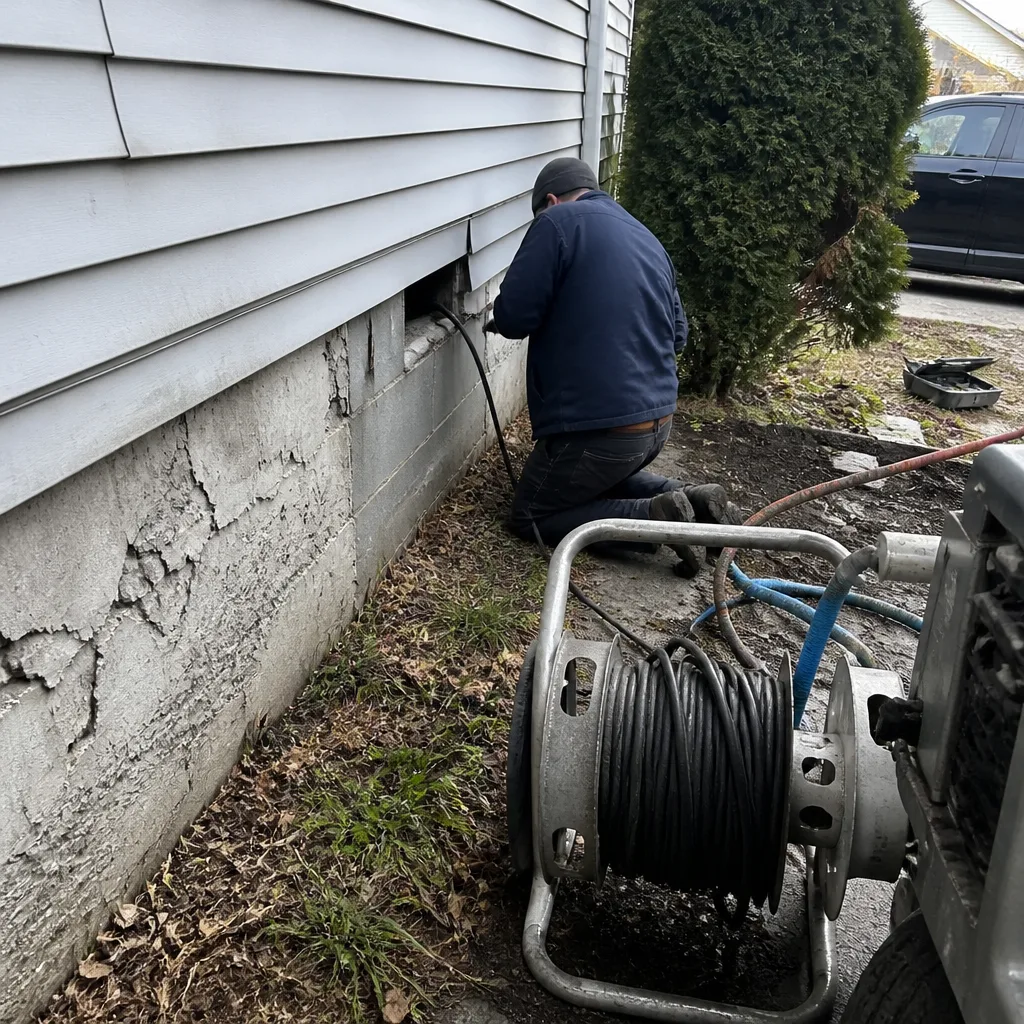 Before
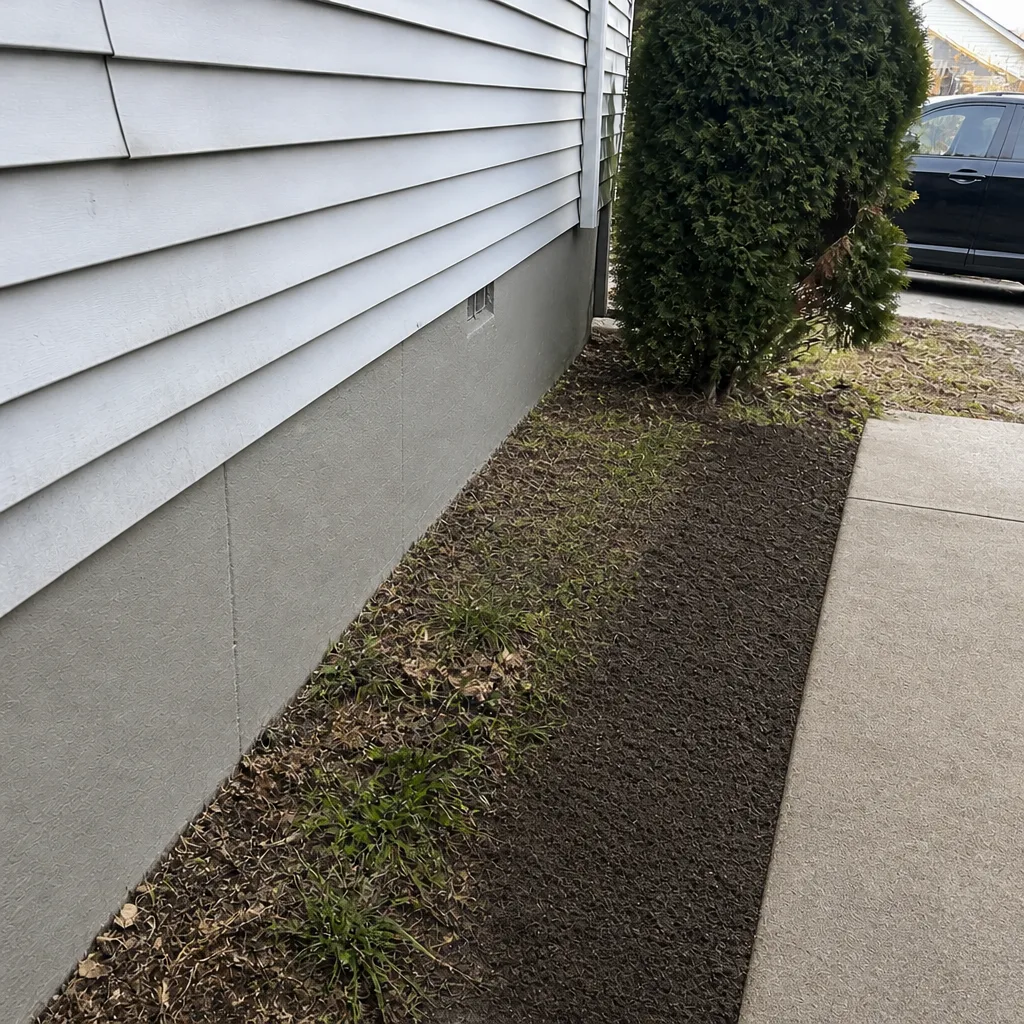 After
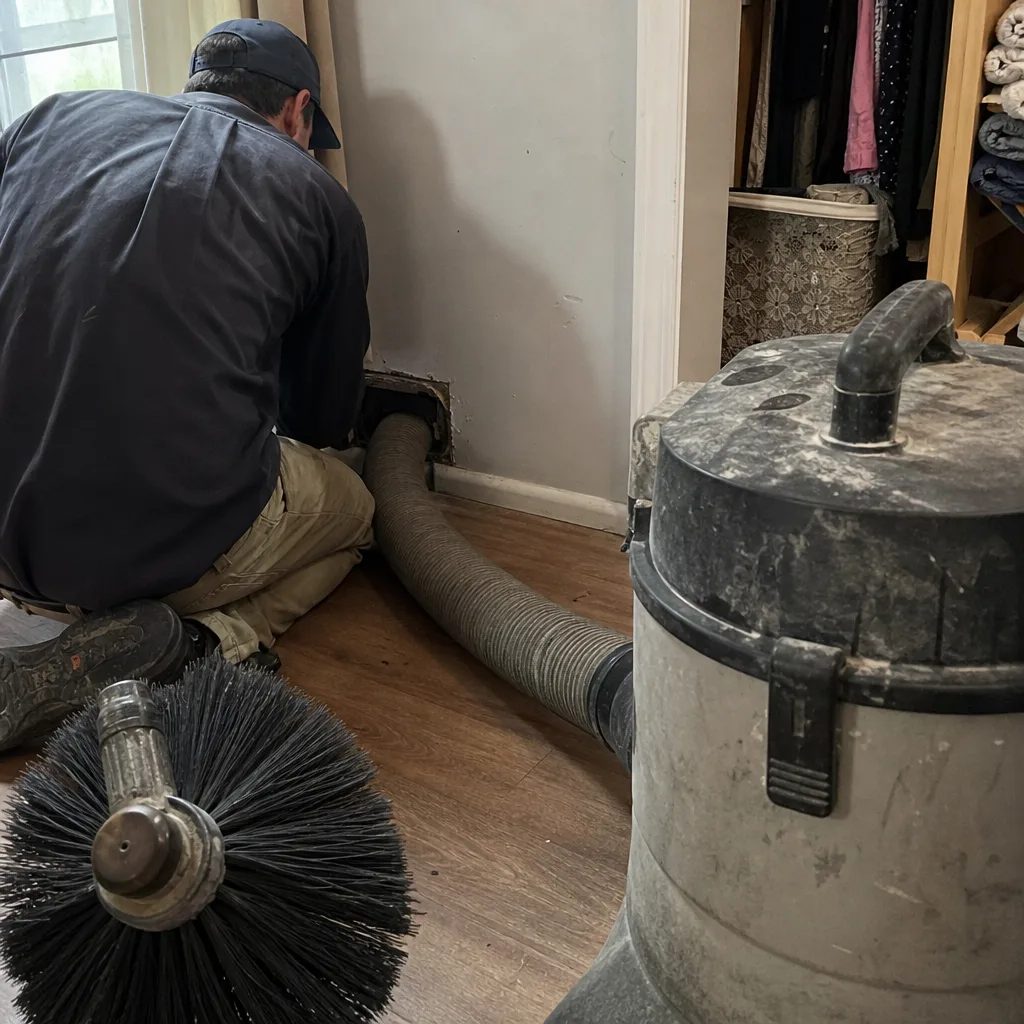 Before
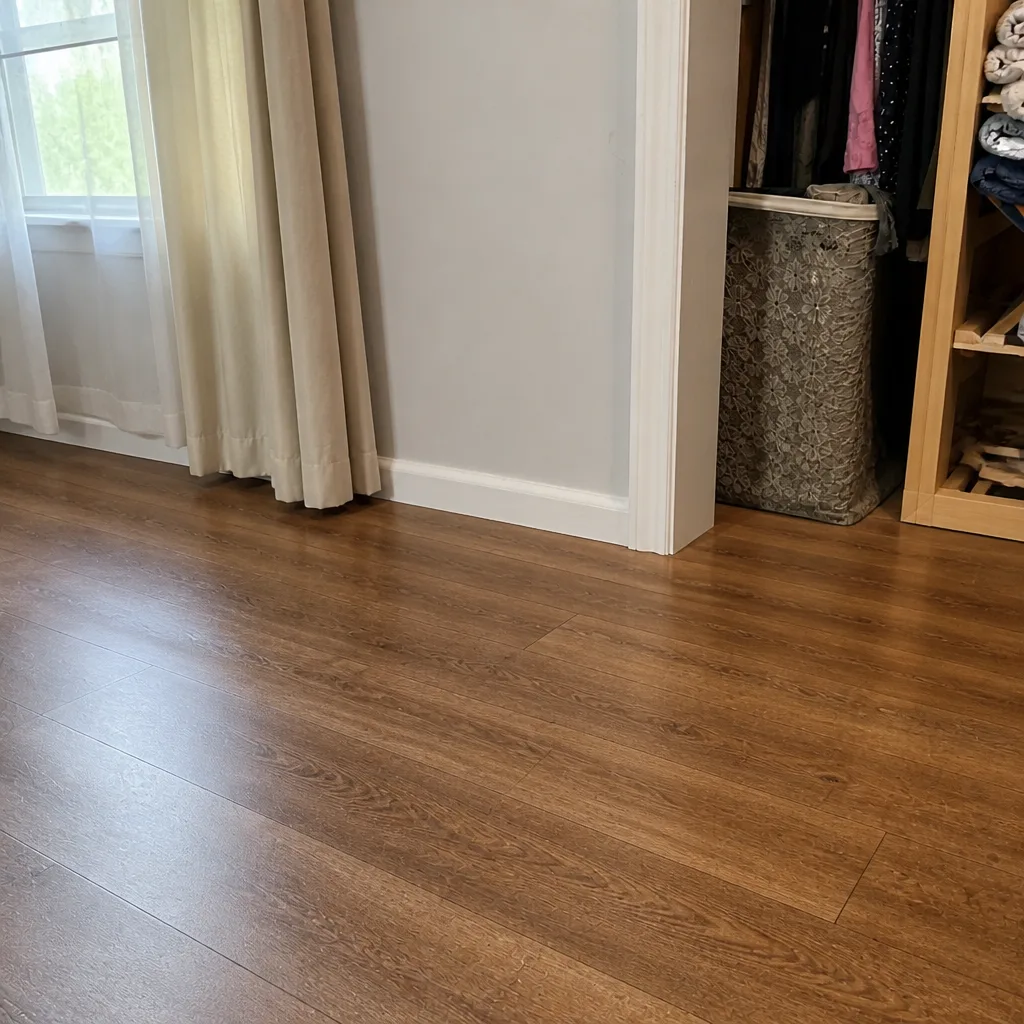 After
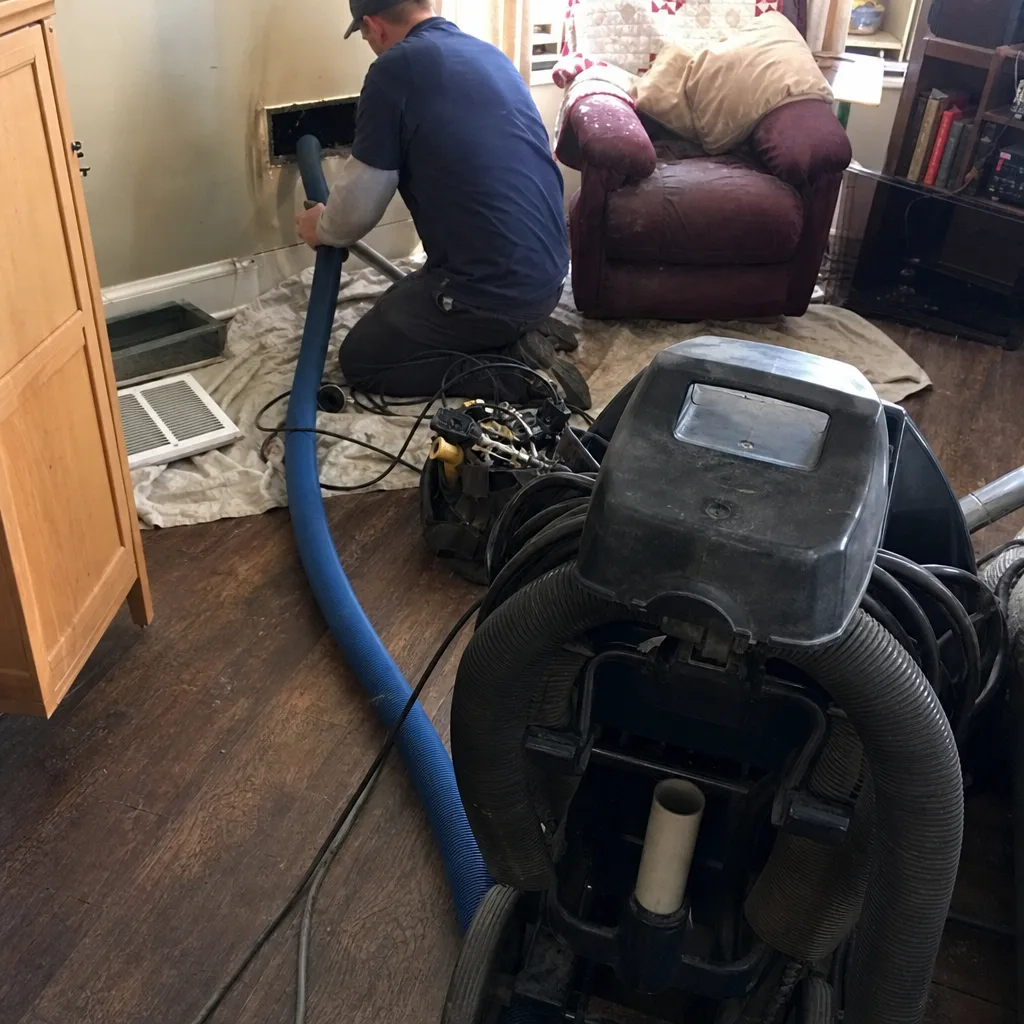 Before
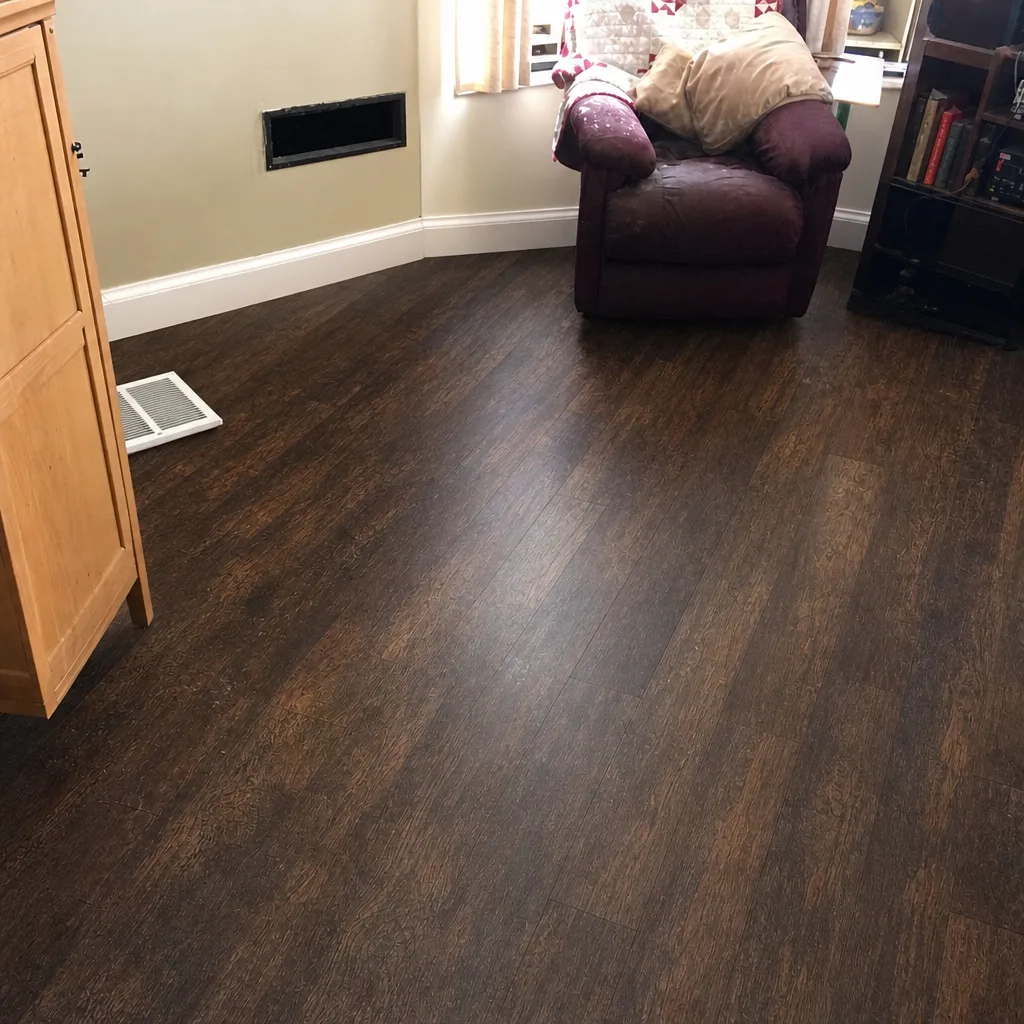 After
When to Call a Professional
Call when any of the checklist items moves more than your baseline allows: uneven grille loading that shifts fast, flex duct sag that’s visible from a walkthrough, condensation or moisture at the air handler, or an odor that persists past the first week of a season. Call when a remodel has just finished and the system has seen drywall dust. Call when the dryer vent is overdue by your own reckoning. Call when the answer isn’t obvious from your log. Duct Cleaning Syracuse offers free estimates in Syracuse – call (855) 819-5569. We answer 24/7. Fast dispatch from 7am to 7pm, Sunday through Friday. Our technicians have up to 14 years of experience, and we bring professional-grade equipment to every visit: Rotobrush and Nikro on cleaning, Abatement Technologies where containment matters. The written estimate sets the price, one flat price per system, agreed before any work begins.
Frequently Asked Questions
There’s no fixed number of years that fits every Syracuse home, and a schedule-based answer isn’t useful. Use the five-checkpoint review at furnace startup in October and again mid-summer. If your log shows buildup or duct sag progressing between reviews, that’s the signal to schedule a professional look. If not, you have data showing the system is stable. Call (855) 819-5569 for an exact quote based on your system – estimates are free.
Whole-system pricing depends on the number of runs, accessibility, system condition, and whether repair is involved. We set one flat price per system by written estimate before any work starts, so the price you agree to is the price you pay. There’s no per-vent pricing and no teaser coupon figure that turns into a bigger invoice on site. Call (855) 819-5569 for an exact quote on your home – estimates are free.
Low coupon quotes typically cover a surface-level pass that leaves the return plenum, the joints, and the air handler surrounding area untouched. The material that matters is usually in exactly those places. A quote that’s a fraction of the rest is worth asking about in detail: what equipment, what coverage, what photos at the end. If the answer is vague, the price is hiding a smaller job. Call (855) 819-5569 for a clear estimate of what full-system cleaning involves in your home.
Ask for before-and-after photos of your own ducts, not stock images. Any crew that uses professional equipment captures what’s inside the system as part of the work; a crew that won’t share the photos is a crew to be concerned about. The other signal is a written estimate that matches what’s on the invoice. Call (855) 819-5569 and ask what documentation comes with the visit.
Yes, because the filter only catches what reaches it. Debris accumulates inside the plenum, in flex duct runs, at boots, and on the return side, in places the filter never touches. Regular filter changes are the minimum, not the whole checklist. Call (855) 819-5569 for an assessment if your log shows buildup on the system side.
The five checkpoints are visual and require no tools beyond a flashlight and a phone camera, so yes, you can do those yourself. What you can’t do is look inside the duct, measure airflow, or assess the air handler internals. That’s when the checklist becomes a call to a professional. Call (855) 819-5569 for a free estimate when the log says it’s time.
The Bottom Line
Duct maintenance works when it’s driven by observation, not by the calendar. Establish the five plain checkpoints, log them with photos and dates so deviations jump out, review at furnace startup, mid-summer humidity, and after a remodel, and use the decision tree to turn an observation into a call only when it truly warrants one. Filter changes are yours. Anything that shows up as sag, condensation, or persistent odor belongs to a professional. On a typical Syracuse system, that keeps cleaning scheduled on real signals instead of on a guess, and it keeps the repair questions in front of the right person before they turn into bigger problems.
Our approach is simple to describe: we clean it, and if it’s broken, we fix it. Three services only, done in depth. Air duct cleaning, dryer vent cleaning, and the repair side of ductwork.
If you’d like to start with an assessment rather than a coupon, call (855) 819-5569 for a free estimate in Syracuse. We answer 24/7. Fast dispatch from 7am to 7pm, Sunday through Friday. One flat price per system agreed before work starts, before-and-after photos of your own ducts at the end, and a written estimate setting the final price.
Written by the team at Duct Cleaning Syracuse.