
Last updated November 15, 2026
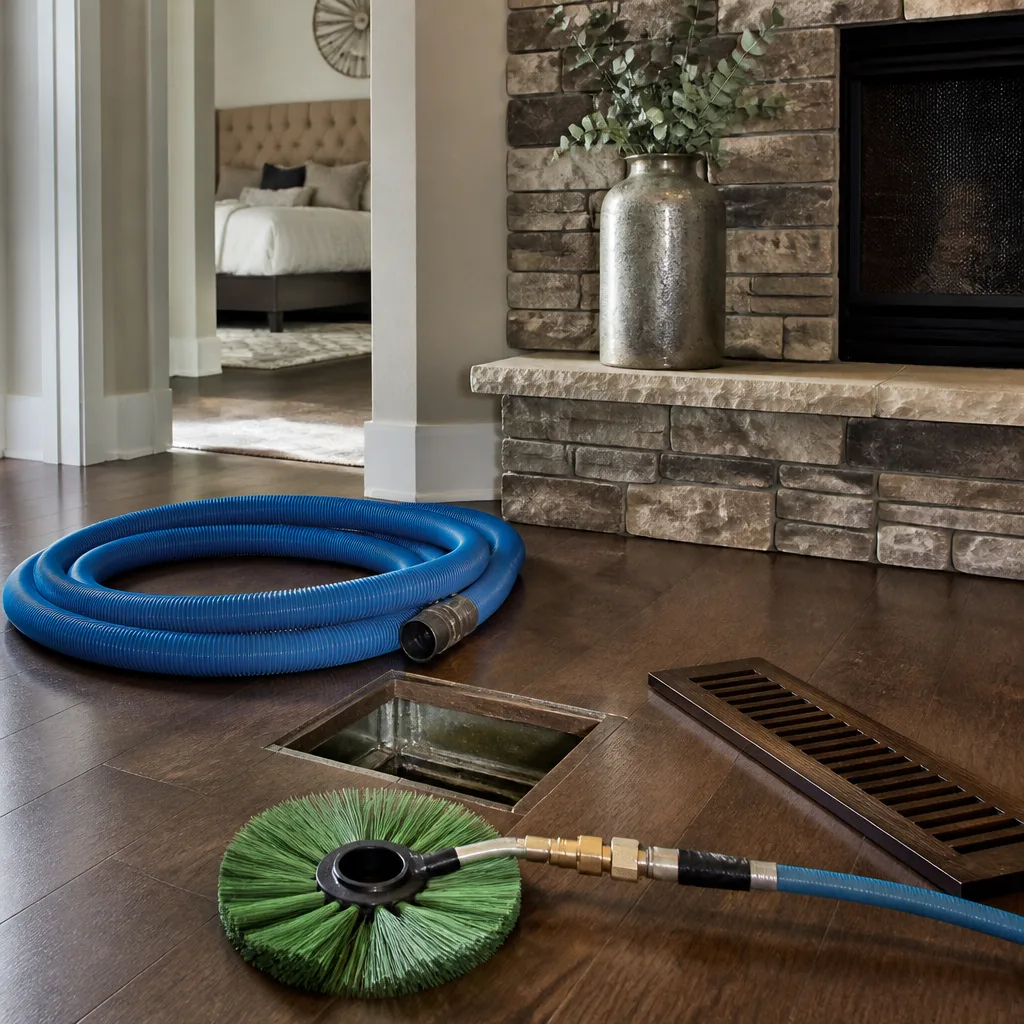 Whole-home duct cleaning
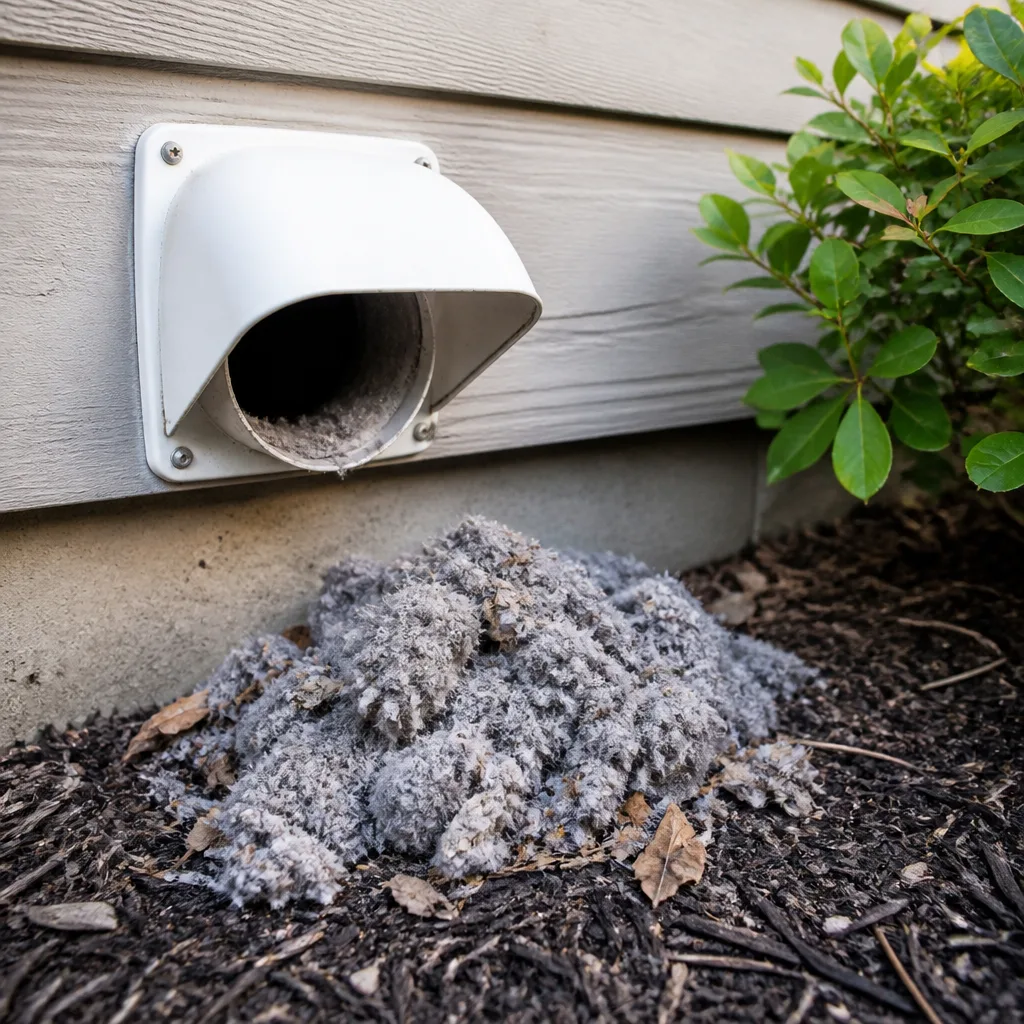 Dryer vent cleaning
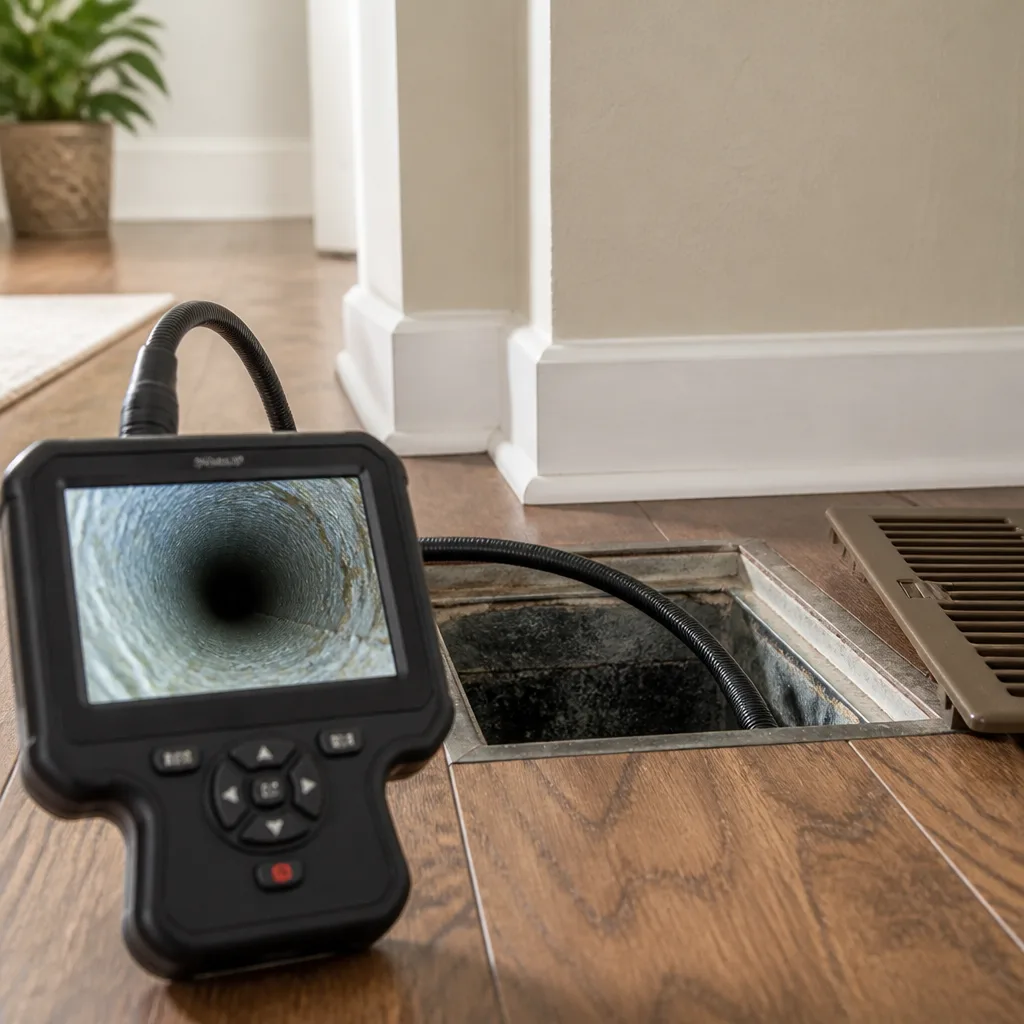 Camera inspection
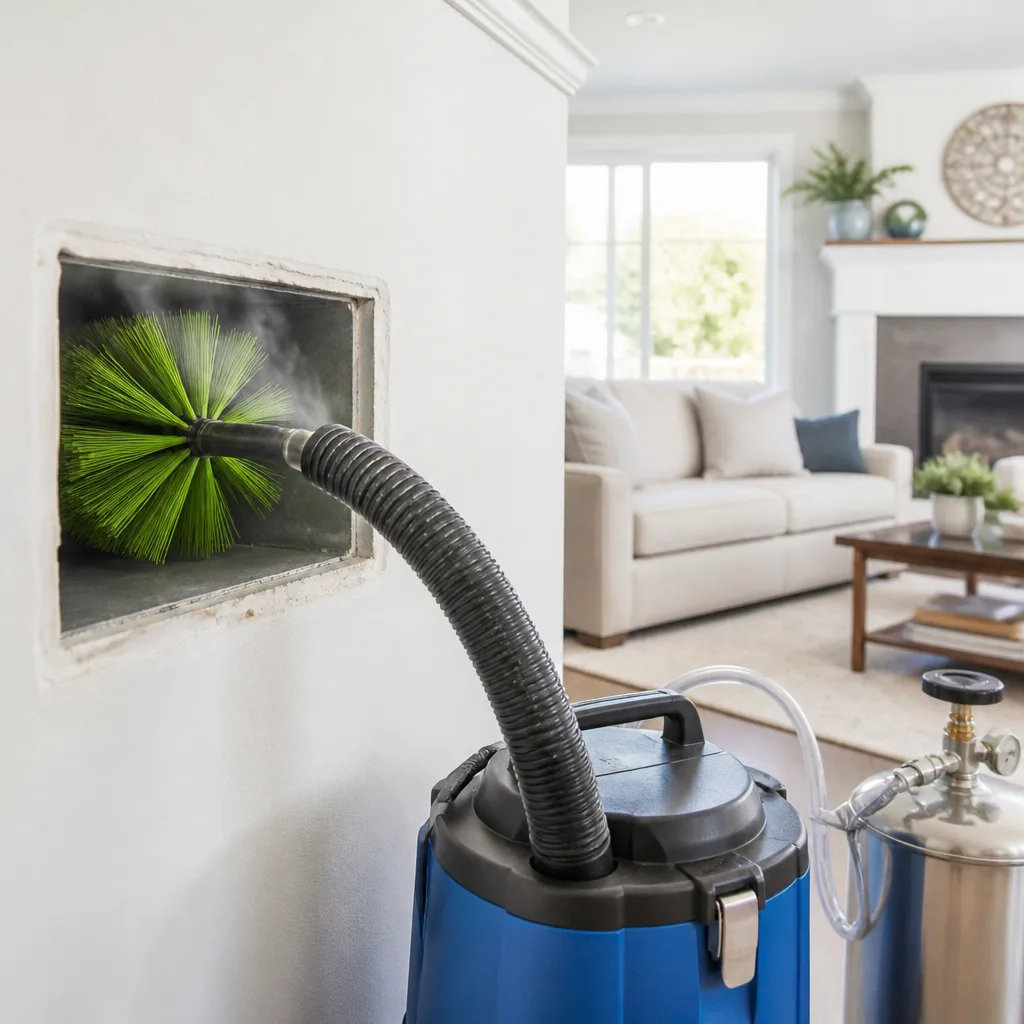 Sanitizing & deodorizing
Whole-system duct and dryer vent check with before-and-after photos - you see exactly what came out of your vents
That "$99 whole-house special" is a bait ad - the real number appears once they are in your hallway, or the "clean" is a shop-vac at the register. We photograph the inside of your ducts before and after instead.
Air Duct Cleaning Maintenance Schedule: What to Do and When
Most homeowners carry around a rule they’ve never actually checked: clean your ducts every three to five years, no exceptions. That rule sounds responsible, and it’s the one every generic article repeats. It’s also why so many people either clean too often or, more often, wait far too long. A house with two dogs, a recent basement renovation, and a long run of flex duct can build up cleaning-worthy debris in under two years. The same house down the street without those factors might go seven years without a real problem. The calendar isn’t what drives buildup. The conditions inside your house are. In this guide we’ll lay out how to build a maintenance schedule around your specific home, what you can check yourself, and when it’s time to bring in professional equipment. We’ll keep it tied to Syracuse and the way homes here actually run.
Quick Answer
There’s no single interval that fits every home. A reasonable baseline for most Syracuse homes is a professional duct cleaning every three to five years, but that interval moves. Homes with pets, recent renovation dust, or allergies should plan on every two to three years, while a clean, low-shed home with well-sealed ducts can stretch to five or more. The right schedule is set by what’s in your house, not the calendar on the wall.
Styles & brands we work with
- Whole-home duct cleaning
- Dryer vent cleaning
- Camera inspection
- Sanitizing & deodorizing
Table of Contents
- Why the Three-to-Five-Year Rule Falls Short
- Baseline vs. Accelerant Conditions: Finding Your Interval
- How Syracuse Weather Compresses the Timeline
- Sheet Metal vs. Flex Duct: Different Maintenance Needs
- What You Can Do Every Year Yourself
- Building a Home Log That Speeds Up Every Inspection
- The Other Duct: Your Dryer Vent Schedule
- Warning Signs You’ve Waited Too Long
Why the Three-to-Five-Year Rule Falls Short
The three-to-five-year recommendation comes from averaging. Averaging across homes with wildly different conditions produces a number that’s wrong for almost everyone. A home with no pets, no carpet, and a well-sealed system can go well beyond five years before a cleaning is worth the money. A home finishing a basement remodel, with drywall dust still settling into the return, can need attention inside of a year.
Debris accumulates for specific, measurable reasons. Every hour your HVAC system runs, it moves air through the same ductwork, and whatever that air carries – pet hair, lint, cooking residue, drywall powder, pollen – settles on the interior surfaces. The more hours the system runs and the more particulate the air carries, the faster the interior loads up. That’s the whole mechanism. Once you see it that way, the schedule stops being a calendar question and starts being a math question about your own house.
In our experience across Syracuse, we’ve seen this play out consistently. Homes in older neighborhoods with original metal ductwork and a pet often have far more buildup at year four than a newer build with sealed flex runs at year eight. The number that matters isn’t age. It’s activity.
- More system run time means more air through the ducts, which means faster sediment.
- More particulates in the air – pets, renovation, smoke – means more of it settles.
- Poorly sealed or leaking ducts pull unfiltered air from crawlspaces and wall cavities, adding to the load.
So the schedule you build should start from your conditions, not a rule someone handed you. The next section breaks down how to identify your own interval.
Baseline vs. Accelerant Conditions: Finding Your Interval
Think of your home as having a baseline set of conditions and a set of accelerants. The baseline determines your starting interval. Each accelerant shortens it. Stack a few accelerants and you can cut the interval roughly in half.
Baseline Conditions
A home with no pets, no smokers, no recent renovation, and ductwork that holds a seal reasonably well sits at the baseline. For most Syracuse homes that means roughly every four to five years for a professional cleaning, paired with the annual self-checks we describe later.
Accelerant Conditions
Each of these pushes the schedule shorter:
- Pets – especially dogs that shed. Pet hair is light, travels on airflow, and settles fast.
- Recent renovation or new construction – drywall dust, sawdust, and construction debris land in the returns and stay there. Plan a professional cleaning after the work is done.
- Smokers in the home – combustion residue coats duct surfaces and can carry odors for years.
- Occupant allergies or respiratory conditions – the threshold for “clean enough” drops, so plan on the shorter end of the range.
- Carpet and high-shed furnishings – they feed the air with fiber that ends up in the ducts.
- Long HVAC run hours – covered in detail below, but Syracuse homes run their furnaces hard.
How to Combine Them
Here’s a simple decision framework. Start with a baseline of four to five years. Subtract a year for each major accelerant that clearly applies to your house. If you land at two years or shorter, that’s your interval. It’s not overkill – it reflects what’s actually happening in your specific system.
- List your accelerants: pets, smokers, renovation, allergies, high-shed furnishings, long run hours.
- Start at four to five years for a baseline home.
- Subtract one year per applicable accelerant.
- Round down, not up, if you’re on the fence.
- Commit to annual self-checks so you can adjust as conditions change.
The point isn’t precision to the month. It’s recognizing that your house is not “average” and shouldn’t follow an average schedule.
How Syracuse Weather Compresses the Timeline
Syracuse is a place where the heating season runs long. Cold comes early and stays late, and the furnace can be running from late fall through the far side of spring. That matters for your duct schedule because HVAC run hours are the single biggest driver of debris accumulation. The more hours the system runs each year, the faster the interior of your ducts collects sediment – even if the air itself carries the same amount of particulate year over year.
Nationally, a home in a mild climate might run its heating and cooling system for a fraction of the year. In Syracuse, the long cold stretch means systems here log far more run hours over twelve months, and that compresses the effective debris timeline. The practical takeaway: for a Syracuse home, the same conditions that would give a house elsewhere four or five years between cleanings might give you three or four here. That’s not marketing. That’s what run hours do.
The summer picture adds its own wrinkle. Humid summer air enters the return side, and if your ducts sit in a humid basement or crawlspace, that moisture helps dust cling to duct walls rather than staying airborne. Some homes around Syracuse also deal with seasonal moisture in the basement through spring snowmelt and heavy spring rain, which reinforces the value of keeping ductwork dry and sealed. If you notice a musty smell coming from registers after the damp months, it’s worth booking an air duct cleaning and having the ducts inspected for moisture or seal failures.
None of this means cleaning more often than your conditions warrant. It means using the local climate as one of the inputs when you set your interval, and being honest about the fact that Syracuse homes run their systems harder than the national average.
Sheet Metal vs. Flex Duct: Different Maintenance Needs
Duct material changes both how debris collects and how early you’ll see the warning signs. If you’re not sure what you have, it’s worth learning, because the answer shapes your schedule.
Sheet Metal Trunk-and-Branch Systems
Older Syracuse homes often use a trunk-and-branch sheet metal system – a large rectangular trunk line with round or rectangular branches feeding each room. Sheet metal surfaces are relatively smooth, so debris tends to settle in a thin layer along the bottom of the runs rather than packing into the walls. The early warning signs are subtle: dust patterns around registers, visible liner lifting where the insulation has come loose, or an increase in settled dust around the house.
The upside of sheet metal is that it responds well to mechanical cleaning. A rotary brush system like the Rotobrush we use agitates the duct walls and dislodges what vacuum alone leaves behind. The downside is joints and seams. Over decades, seams can separate, and where ducts run through unconditioned space they can leak. If we find failed seams during a cleaning, we fix them as part of our air duct repair service rather than cleaning around an obvious problem.
Flex Duct Systems
Flex duct is corrugated and ribbed, so debris collects in the ridges. That means flex systems load up faster and show warning signs differently. Common signs include visible darkening inside the duct where it meets the register boot, loose or sagging runs, and crushed sections where the duct has been pinched during installation or by stored items in a basement.
Flex also presents a maintenance consideration sheet metal doesn’t: a crushed run chokes airflow and effectively traps debris on the upstream side. If you find a crushed flex run during your annual check, note it, because no amount of cleaning will fix an airflow restriction. The right fix is a repair or a re-run, which is where a dedicated duct repair service earns its place.
- Sheet metal: smoother surfaces, slow accumulation, warning signs at seams and register boots.
- Flex duct: ribbed surfaces, faster accumulation, warning signs in crushed runs and darkening at boots.
- Mixed systems: plan on the flex section driving the schedule; flex will need attention first.
What You Can Do Every Year Yourself
You don’t need any special tools to keep an eye on your ducts. A flashlight, a filter log, and a few minutes a couple of times a year will tell you more about the condition of your system than any calendar reminder. Here’s what we recommend for Syracuse homeowners between professional cleanings.
- Inspect every register. Remove the grille and shine a flashlight down the boot. If you can see clear to the next bend, you’re in decent shape. If the interior walls are coated in gray fuzz, that’s a signal your interval is coming up sooner than you thought.
- Log every filter change. Write the date and the filter model on the filter itself, not on a sticky note you’ll lose. A year of dates tells you how fast your filter loads up, which in turn tells you how much particulate is in your air.
- Check tape at accessible joints. Look at the duct connections you can reach in the basement or attic. Foil tape that’s peeling, disintegrating cloth tape, or visibly separated seams are all worth noting. Don’t try to reseal an obviously failing joint yourself if it’s on the supply side near the air handler; that’s a job for a professional, both because of access and because the wrong tape won’t hold.
- Look for dark streaks around registers. Horizontal dust lines on the wall just below a supply register tell you that dust is being pushed out with the airstream rather than carried cleanly through the room.
- Listen for a change in airflow. If a room that used to get strong airflow feels weak, note it. Airflow changes are often caused by a crushed flex run or a separation in the duct, neither of which cleaning can fix.
Those five checks take less than an hour a year. They give you a real picture of your system’s condition, and they give any professional you call a head start.
Building a Home Log That Speeds Up Every Inspection
A simple home log is one of the most useful documents a homeowner can keep, because it turns vague memory into a record. When you call a duct company, the same questions come up every time: when was the last cleaning, who did it, what did they find, what did they fix. If your answer is “I think it was three or four years ago,” the inspection starts from zero. If you have a log, it starts from a real baseline.
What to Put in the Log
- Date of last professional cleaning and the company that did it.
- Equipment used. Note if a rotary brush was used or if it was vacuum-only. It matters for the next time.
- Findings from the last inspection. Note any failed seams, crushed flex runs, or suspect joints.
- Repairs made – what was fixed and where.
- Filter change dates for the last year, so you can see your filter load rate.
- Annual register checks – one line per register, clean or loaded.
- Renovation dates – any remodeling work that added dust to the system.
- Dryer vent cleaning date if you have one.
Why It Matters
Two reasons. First, it makes your inspection faster and more accurate, because the professional can start at the actual current state instead of rediscovering it. Second, it makes you harder to mislead. If a company claims your ducts are “packed solid” and your log says you had them cleaned two years ago and the filters have been replaced on schedule, you have a legitimate question to ask. Documentation is a homeowner’s best defense against a sales pitch.
This is also why before-and-after photos matter. If you book a duct cleaning in Syracuse, ask to see photos of your own ducts, not generic marketing images. A log entry without a photo is a claim. A log entry with one is a record.
The Other Duct: Your Dryer Vent Schedule
Your dryer vent is the shortest duct in the house and, by most fire-risk measures, the one that matters most. Lint is highly combustible, and a vent packed with it is a genuine safety concern. Lint accumulation in a dryer vent doesn’t follow the same schedule as air ducts – it builds much faster, and a household that does a lot of laundry can load a dryer vent heavily within a year.
For most Syracuse homes, an annual dryer vent cleaning is a reasonable baseline. Households that run laundry for a larger family, or that notice clothes taking longer to dry, should plan on every six to twelve months. Signs it’s time:
- Clothes take noticeably longer to dry than they used to.
- The dryer feels hot to the touch during a cycle.
- You smell a faint burning or scorched odor when the dryer runs.
- The exterior vent flap doesn’t open fully, or lints collects around it.
Because dryer vent cleaning is a focused mechanical job – removing lint from the length of the vent and the exterior termination – it fits naturally alongside a duct cleaning visit if both are due around the same time. If you’ve scheduled dryer vent cleaning recently or you’re due, add the date to your home log. It’s a small entry that keeps a safety-critical item visible.
Warning Signs You’ve Waited Too Long
The schedule is a useful guideline, but your house will also tell you when you’re past due. Some of these signs come from the ducts themselves and some come from the way the house feels and smells. Treat any one of these as a signal to get an inspection and consider a cleaning regardless of your schedule.
- Visible dust on the supply registers. If you wipe a register and it’s coated again in a week, debris is being pushed out of the ducts.
- Persistent dust in rooms that get heavy airflow. Horizontal dust lines on walls just below registers are a tell.
- A musty or stale smell from the system when it kicks on. This often means moisture and biological growth somewhere in the ductwork, which is worth inspecting.
- Worsening allergy symptoms indoors. If indoor symptoms are worse than outdoor ones, the duct system deserves a look.
- A noticeable increase in filter load rate. If filters that used to go three months now load in weeks, something upstream is generating more particulate.
- Sound of debris moving in the ducts. A rattle or patter from the ducts when the system starts suggests loose material inside.
- Airflow drops in one or more rooms. More often a crushed flex run or separation than an accumulation problem, but worth diagnosing.
Any of these is worth a call. In our experience, the homes with the most buildup rarely have the most obvious symptoms early on – it’s the subtle ones that tell you to look.
Common Mistakes to Avoid
- Treating the three-to-five-year rule as gospel. It’s a starting point, not a schedule. Your own conditions set the interval, and a house with two dogs and a recent renovation should ignore the baseline and plan shorter.
- Skipping the inspection after a renovation. Drywall dust settles into the returns and stays there. Book a cleaning after the work is done, not months later.
- Assuming a low coupon price is the full job. Bait-and-switch pricing is the biggest credibility problem in this trade. Ask for a flat price per system, agreed before work starts, and ask to see before-and-after photos of your own ducts.
- Cleaning around a structural problem. If the duct has a failed seam or a crushed flex run, cleaning won’t fix it. Choose a company that can also repair what it finds.
- Ignoring the dryer vent. Many Syracuse homes schedule their air ducts and forget the dryer entirely. The dryer vent needs a shorter interval, and the safety stakes are higher.
- Not asking what equipment is being used. A vacuum-only service versus a rotary brush system produces very different results. Professional-grade equipment matters, and you’re allowed to ask what’s coming into your house.
- Skipping the home log. If you don’t record what happened, you’re starting from zero every time a professional asks what’s been done.
See the difference
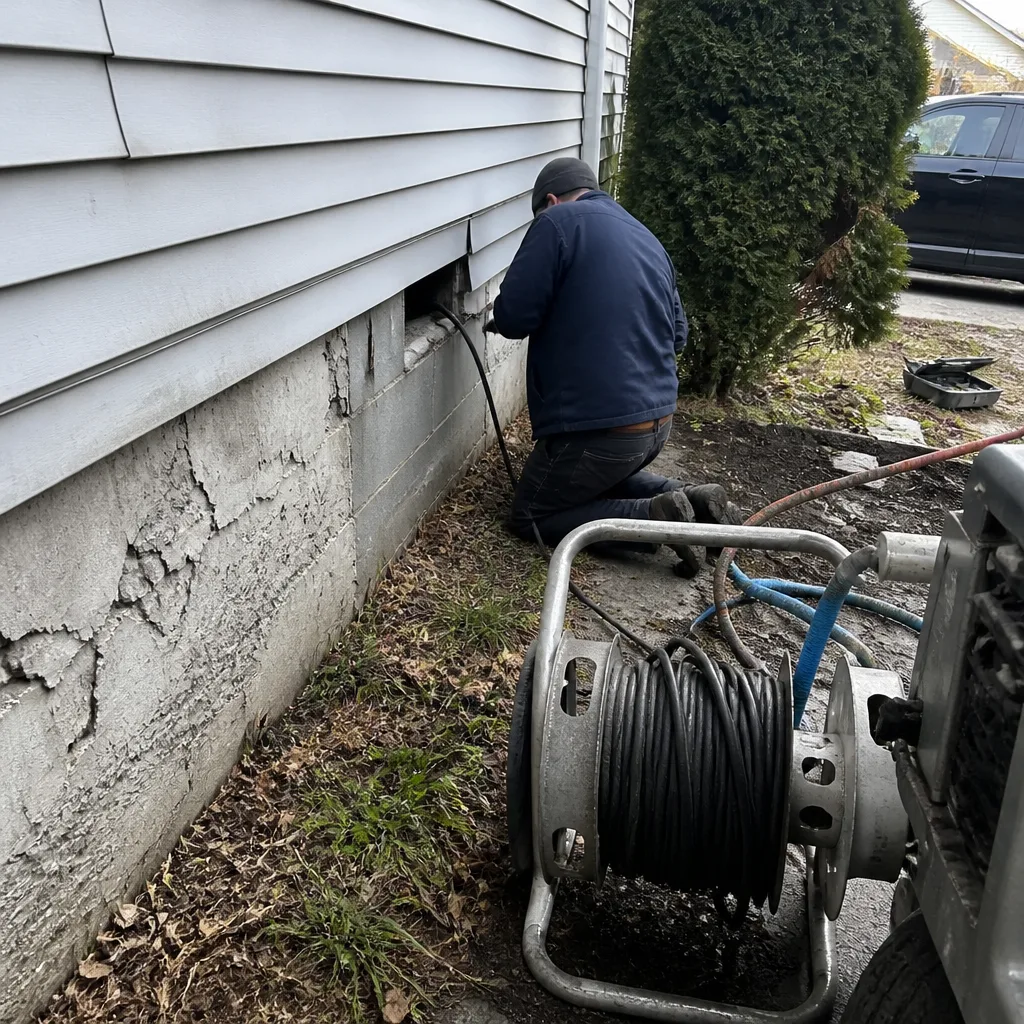 Before
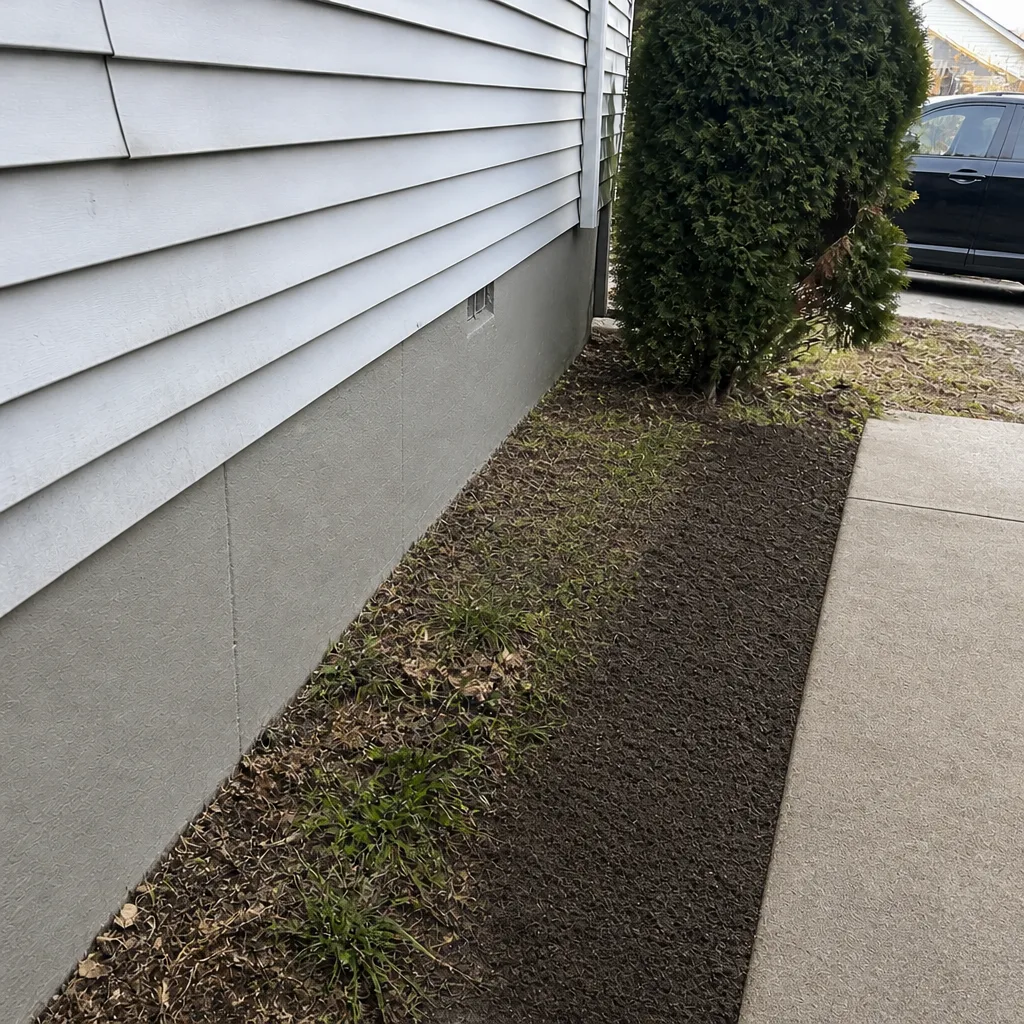 After
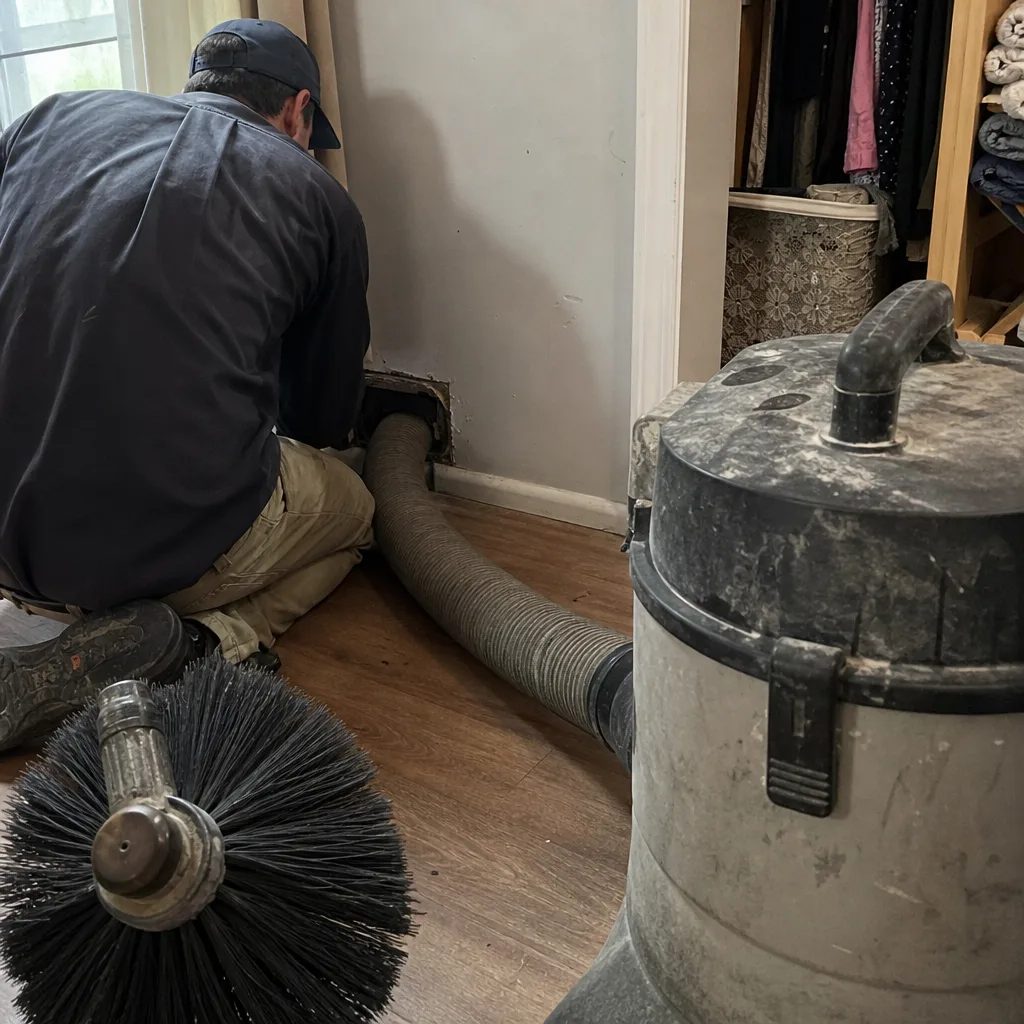 Before
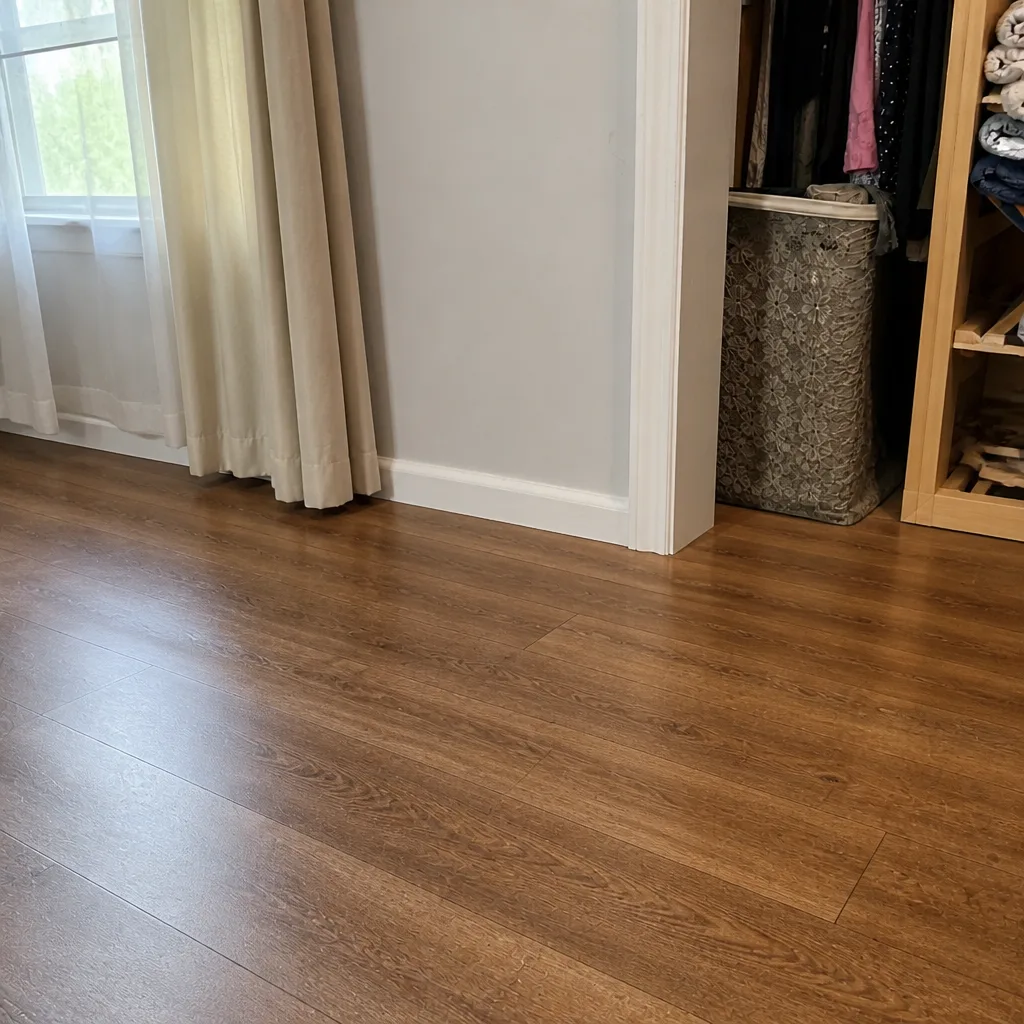 After
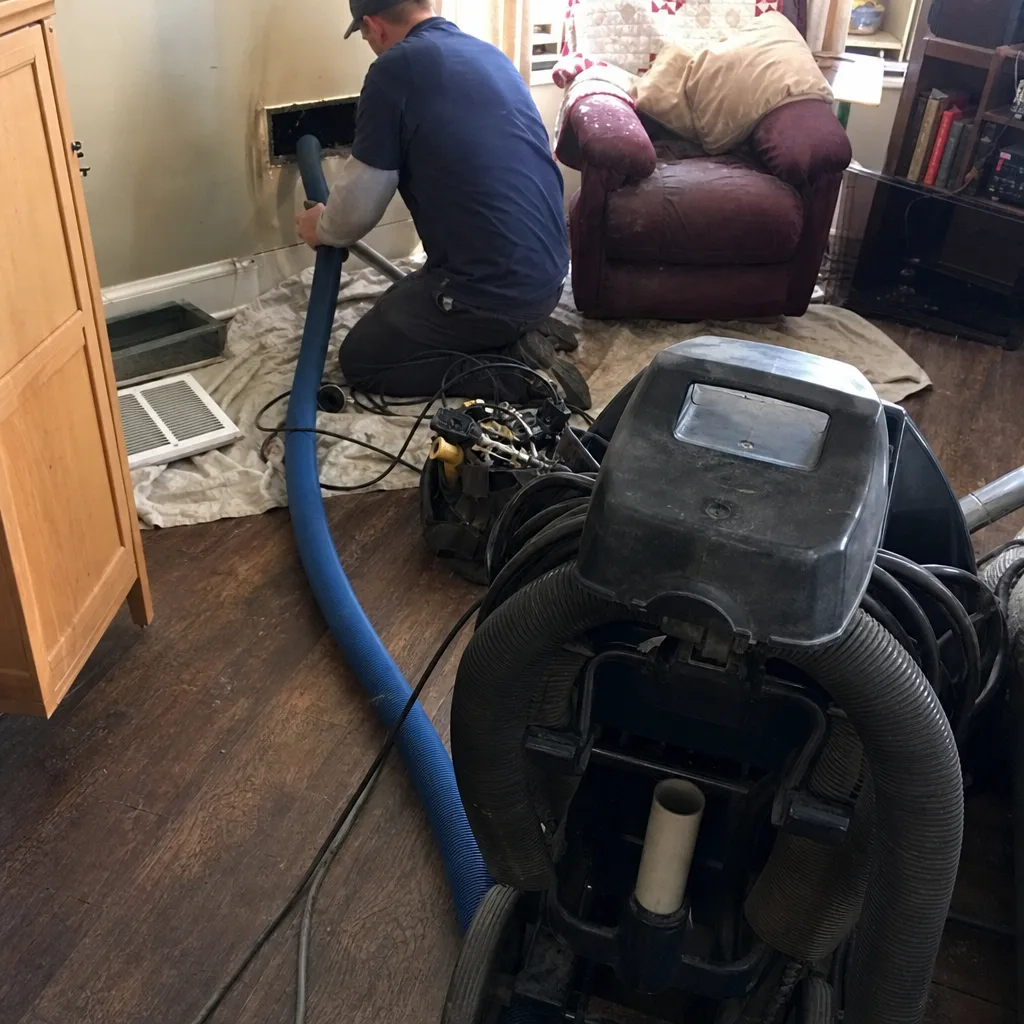 Before
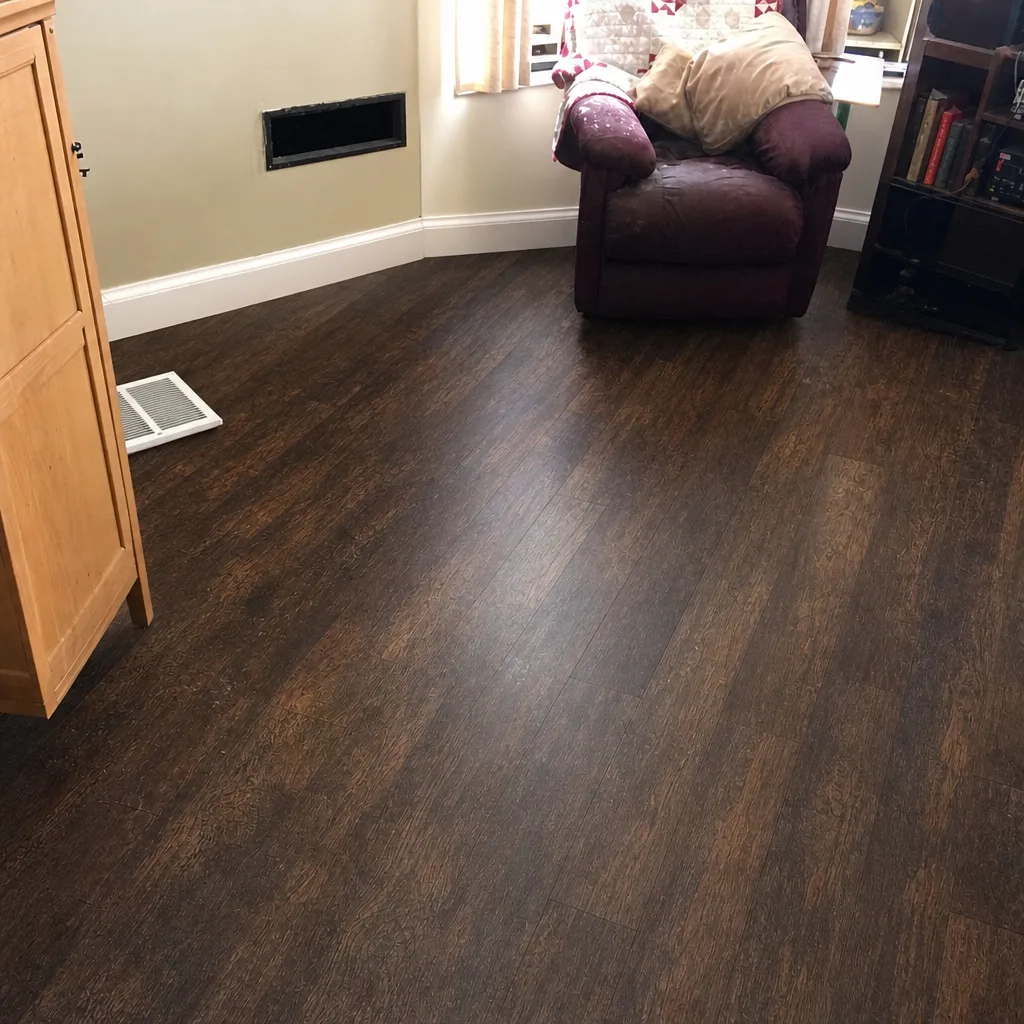 After
When to Call a Professional
Call us when any signal in this guide tells you the schedule has slipped: visible buildup at registers, a musty smell from the system, a filter that loads unusually fast, an airflow drop in one or more rooms, or a renovation that’s just finished. Call if you notice signs of a failed duct joint, a crushed flex run, or a vent that isn’t moving air the way it used to – those need repair, not just cleaning. And call before you trust a quote that sounds too good to be priced per system rather than per vent. Duct Cleaning Syracuse offers free estimates in Syracuse – call (855) 819-5569. We answer 24/7, with fast dispatch from 7am to 7pm, Sunday through Friday. Our technicians have up to 14 years of experience, and we use Rotobrush, Nikro, and Abatement Technologies equipment on every job, with Guardsman protective products and compatibility with Honeywell and Aprilaire whole-home air quality systems. We work from a flat price per system agreed before any work starts, and we can repair what we find rather than cleaning around it.
Frequently Asked Questions
Most Syracuse homes should plan on a professional air duct cleaning every three to five years under baseline conditions, but pets, recent renovation dust, smokers, allergies, and long heating-season run hours push that shorter – often every two to three years. Use the baseline as a starting point and subtract a year for each accelerant in your house. Call (855) 819-5569 for an exact quote – estimates are free.
Filter changes are necessary but not sufficient. Your filter captures what passes through the return, but it doesn’t clean the interior surfaces of the ductwork itself, where debris settles along the walls and in the ridges of flex runs. A good filter extends your interval – it doesn’t replace a cleaning. Call (855) 819-5569 for a free estimate on your home.
Most residential jobs in Syracuse run somewhere from a half day to a full day depending on the size of the system, the material (flex versus sheet metal), and whether any duct repair is needed along the way. A flat price per system is agreed before we start, so there are no surprises if the job runs longer than expected. Call (855) 819-5569 to book an estimate.
Low teaser prices are usually per-vent prices that grow once the technician is on site, or they reflect a vacuum-only service with no rotary brush step. We price a flat rate per system, agreed before work starts, with before-and-after photos of your own ducts so you can see exactly what was removed. Call (855) 819-5569 to get a free written estimate.
Yes, and more often than your air ducts – usually about once a year, sometimes more if laundry volume is high. Lint is combustible, and a loaded dryer vent is a real fire risk. Symptoms include longer dry times, a hot dryer during a cycle, and a faint scorched smell. If it’s been more than a year, book both. Call (855) 819-5569 for a free estimate.
Ask for before-and-after photos of your own ducts, and check whether a rotary brush system was used or a vacuum only. A company that documents its work with photos and can show you the equipment is one you can trust. We’re happy to show you both. Call (855) 819-5569 for a free estimate in Syracuse.
The Bottom Line
There’s no universal calendar for duct cleaning. The variable-interval model wins: start at four to five years for a baseline Syracuse home, subtract a year for every accelerant that applies to your own house – pets, renovation dust, smokers, allergies, high-shed furnishings, or a long-running HVAC season – and round down when you’re unsure. Do the annual self-checks, keep a home log with photos and dates, and handle your dryer vent on its own, shorter schedule. When any warning sign shows up, get an inspection rather than waiting for your interval to elapse. The goal isn’t cleaning more often. It’s cleaning at the right time, with a company that brings professional equipment, prices the job flat per system, and can repair what it finds. For a free estimate, call (855) 819-5569. We answer 24/7, with fast dispatch from 7am to 7pm, Sunday through Friday. Need your Syracuse ducts on a system that fits your house? That’s exactly what we do.
Written by the team at Duct Cleaning Syracuse.